

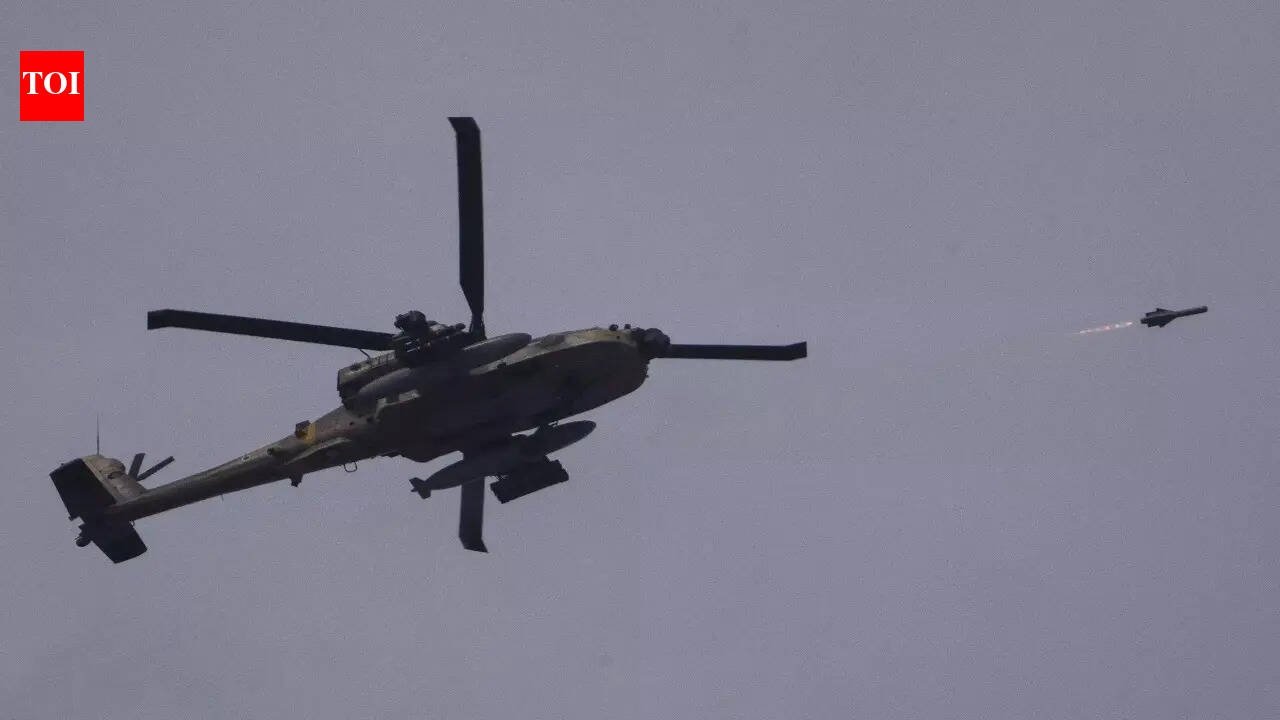
A United States Army AH-64 Apache attack helicopter has gone down near the highly volatile Strait of Hormuz shipping lane. Speaking to reporters at John F. Kennedy International Airport, US President Donald Trump confirmed the incident, stating that both crew members were successfully rescued by emergency recovery teams and are “fine.”
The crash occurred immediately following a fresh exchange of missile fire between Iran and Israel, threatening to derail delicate regional ceasefire negotiations. While The New York Times broke the initial report, US Central Command (CENTCOM) and the State Department have maintained operational silence regarding whether the heavily armed gunship was brought down by hostile Iranian anti-aircraft fire or suffered a catastrophic mechanical failure.
Escalation Metrics in the Maritime Conflict Zone
The downing marks a significant shift in the air combat losses sustained during the broader conflict:
-
The Baseline Attrition: Since hostilities erupted on February 28, Iranian air defense forces have successfully downed at least 30 MQ-9 Reaper drones alongside a small handful of US fighter jets.
-
A First for the Apache Fleet: This incident represents the very first operational loss of an AH-64 Apache gunship in this theater, where the low-flying tank-killers are deployed to directly police maritime borders.
-
The Enforcement Mission: Flown alongside F/A-18 and F-35 stealth fighters, Apaches armed with laser-guided Hellfire missiles serve as the primary tactical assets enforcing the strict American blockade on Iranian crude oil tankers. This operation explicitly aims to counter Tehran’s effective closure of the critical Strait of Hormuz chokepoint to global commercial traffic.
The Diplomatic Dilemma: Levers and Bottlenecks
Despite the downing, President Trump expressed unexpected optimism regarding a potential diplomatic breakthrough, claiming a “very good, strong, powerful deal” could be signed within two to three days. Backed by intermediaries led predominantly by Pakistan, negotiators are racing to bridge a deep chasm between Washington and Tehran.
However, the structural demands from both sides remain deeply entrenched:
The Geopolitical Reality: The economic stakes of a prolonged military escalation are immense. While the US administration maintains that it could easily resort to intensive bombing campaigns to degrade Iranian infrastructure, doing so would likely result in a complete, months-long shutdown of the Strait of Hormuz. For global markets, a total blockage of that corridor would instantly choke off international oil shipments, sending shockwaves through energy and financial sectors worldwide.
