

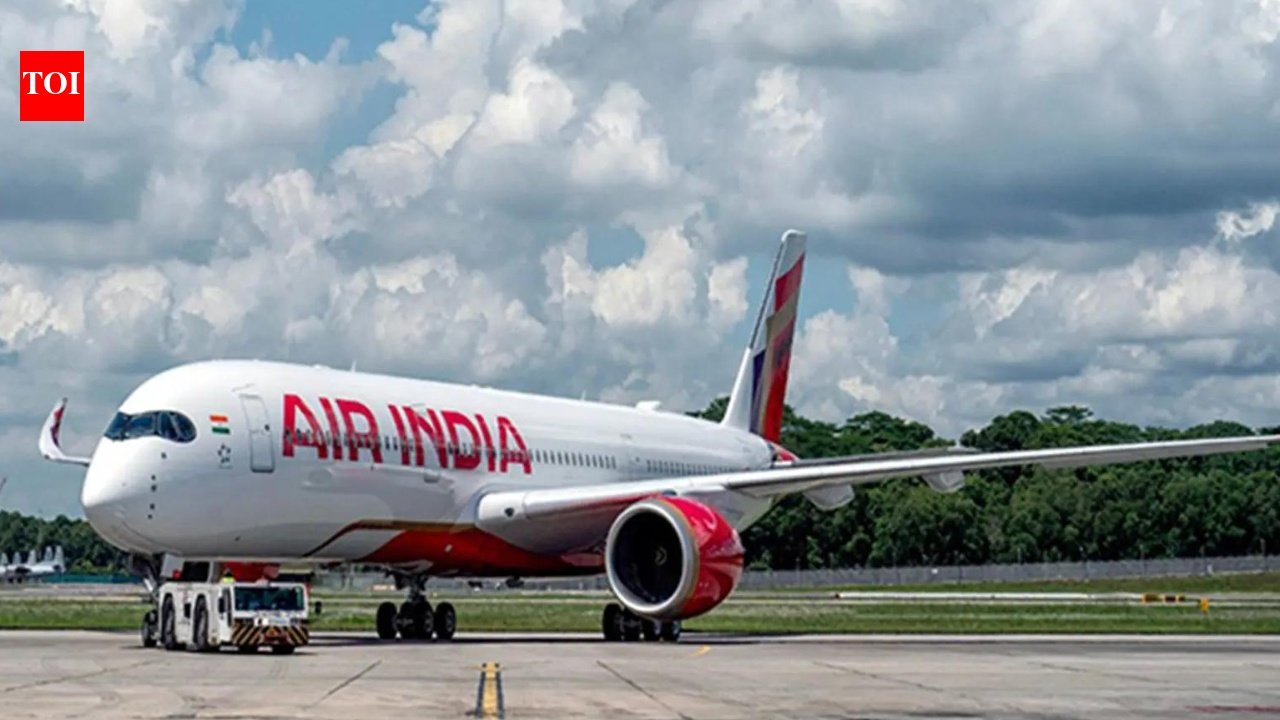
A sudden, aggressive storm at Delhi’s Indira Gandhi International Airport (IGIA) turned heavy airfield machinery into airborne hazards, damaging three parked Air India Airbus A320 aircraft.The incident, which unfolded at Terminal 2, has triggered an official safety investigation by the Directorate General of Civil Aviation (DGCA).
The micro-storm arrived with such rapid, unexpected intensity that a viral video on social media caught ground crew in a frantic, losing chase across the tarmac as high-profile stepladders and baggage trolleys were blown entirely out of control by the winds.
Anatomy of the Damage
The high winds weaponized unsecured ground support equipment (GSE), creating unique points of failure across three separate narrow-body aircraft:
The Core Conflict: The Missing Weather Warning
The primary focus of the regulatory probe revolves around operational preparedness, highlighting a critical breakdown in communication.
According to Delhi International Airport Limited (DIAL), Air Traffic Control (ATC) issued no advanced warning or severe weather alert to the airport operator or operating airlines before the storm hit.
Because tarmac areas act as massive wind tunnels, ground support gear like passenger stairs and cargo dollies must be chained or explicitly locked down when heavy winds are expected. Without a formal warning, the gear was left in its standard operational state, leaving it vulnerable to sudden, severe gusts.
Current Status and Operational Fallout
Aviation sources indicate that Air India wasn’t the only carrier hit; aircraft belonging to other operators also sustained minor bumps during the chaos.
-
Grounded for Repairs: All three Air India A320s were immediately pulled from active service for safety inspections.
-
Return to Service: Engineering teams expect two of the affected jets to cycle back into active flight rotations relatively quickly.
-
Extended Downtime: The third aircraft, which sustained more severe structural or window frame damage, requires extensive repairs and will remain grounded significantly longer.
The DGCA’s final report is expected to redefine safety protocols regarding how aggressively ground equipment must be anchored during summer months when rapid-onset thunderstorms frequently hit Northern India.
