

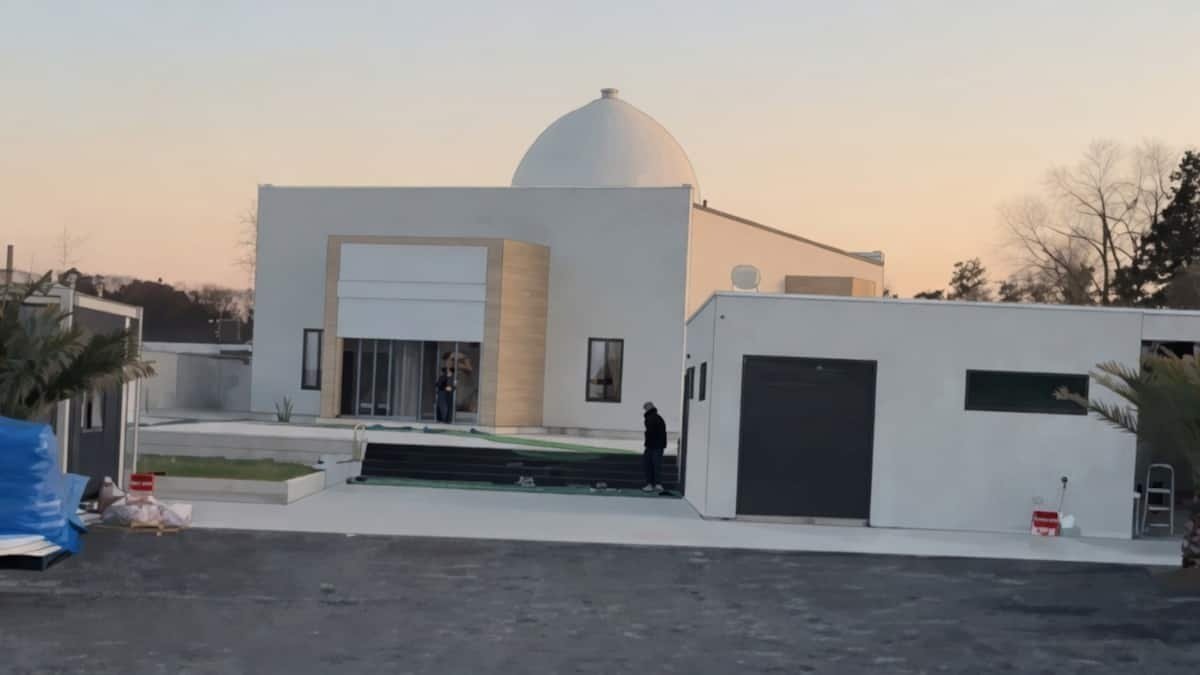
A newly constructed mosque in Kawagoe City, Saitama Prefecture, has triggered a major legal and diplomatic controversy after Japanese municipal authorities declared the building entirely illegal.
The situation has caused significant embarrassment for the Pakistani diplomatic mission because Pakistan’s Ambassador to Japan, Abdul Hameed, personally attended the mosque’s grand opening ceremony on April 3, 2026. Local authorities have since accepted formal applications seeking the demolition of the structure.
The Legal Violations
According to official statements from the Kawagoe municipal government, the project breached strict Japanese urban planning regulations:
-
Restricted Zoning: The mosque sits on a 4,500-square-meter plot officially classified as mountain forest land. It falls squarely within an urbanization control area, a zone where development and construction are strictly prohibited by law.
-
Zero Permits: The building was erected without city planning clearance. Despite warnings from city planners as early as October 2024 to halt construction following local complaints, the builders proceeded to finish the exterior.
-
Enforcement Action: Because the warnings were ignored, the violation has escalated into a full enforcement process, with municipal authorities issuing corrective directives demanding the removal of the structure.
The Diplomatic Fallout & Pakistan’s Response
Following intense public scrutiny in both Japan and Pakistan, the Pakistani Embassy in Tokyo was forced to issue back-to-back clarifications:
The Blame Game: On May 31, the embassy stated that Ambassador Abdul Hameed only accepted the invitation to the April 3 inauguration because the organizers falsely assured him that all required legal permits had been obtained in accordance with Japanese law.
-
Total Disassociation: The embassy has formally severed ties with the project, stating it has no connection to foreign ventures that fail to comply with local municipality laws.
-
Warning to Expats: The mission issued an urgent public advisory demanding that the Pakistani community residing in Japan strictly abide by local construction laws and fully cooperate with Japanese municipal authorities.
Contrasting Community Models
The incident has highlighted the stark difference between the new unauthorized project and older, integrated Islamic institutions in the region.
Shakeel Sheikh Mohammad, a 62-year-old Pakistani representative of the established Yashio Masjid in Saitama, criticized the illegal project, emphasizing that a mosque cannot successfully operate without a foundation of mutual respect and harmony with local Japanese residents.
| Mosque Project | Legal Status | Strategy for Integration |
| New Kawagoe Mosque (Japan Jama Masjid Ramzan) | Illegal. Facing demolition orders for building on protected forest land without municipal clearance. | Built despite ignored city warnings; caused localized friction and diplomatic strain. |
| Yashio Masjid (Est. 2000) | Fully Legal. Formally registered as a recognized religious corporation since 2007. | Works closely with neighborhood associations, coordinates with locals before major Eid festivals, and joins community clean-up drives. |
