

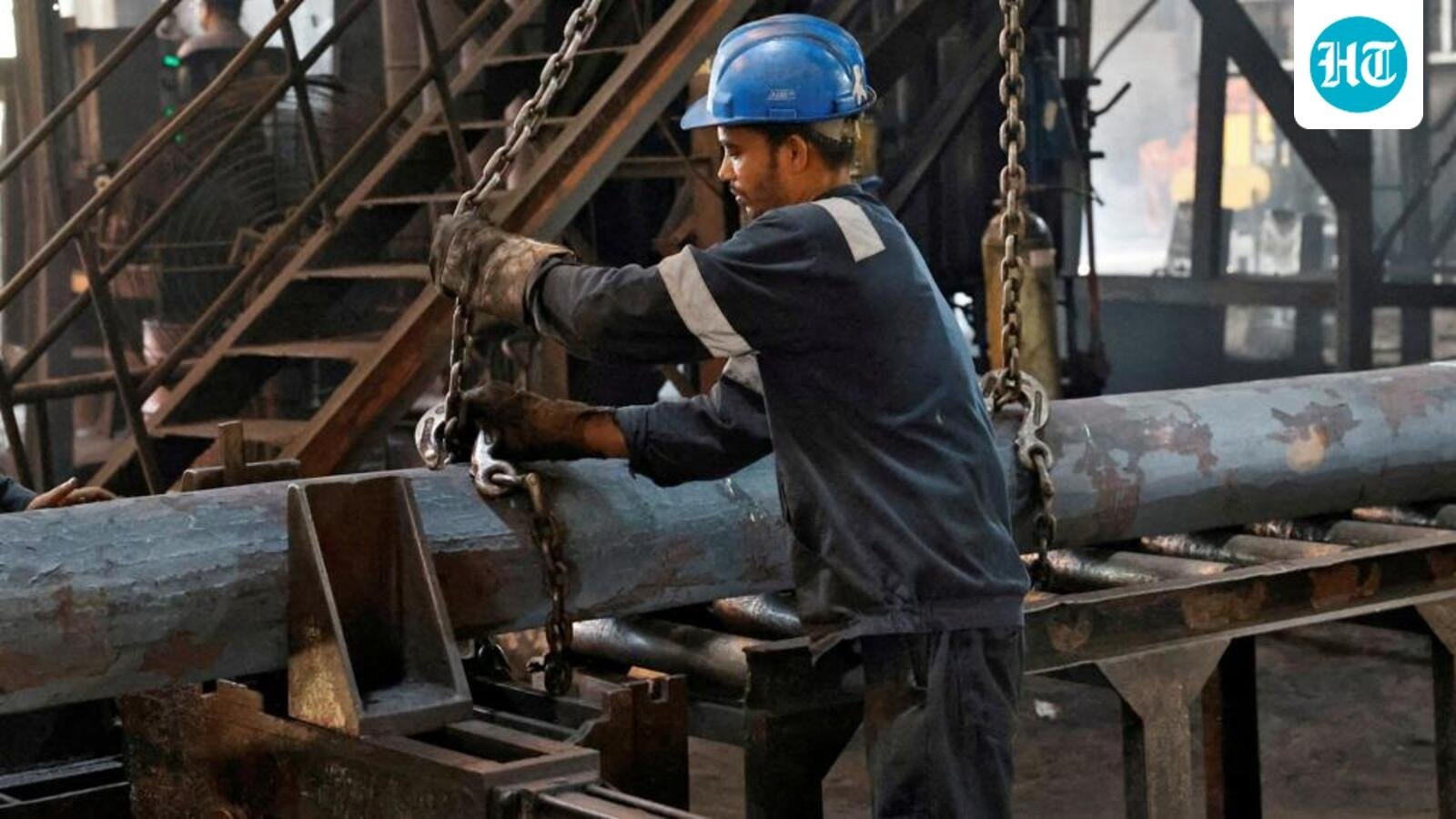
This is a massive structural update to how India measures its economic muscle. The National Statistical Office (NSO) hasn’t just dropped a new data point; they have completely overhauled the Index of Industrial Production (IIP) by shifting the base year to 2022-23 (up from the ancient 2011-12 baseline).
This 10th revision aligns industrial tracking with modern consumption realities—swapping out dying tech like CFL bulbs and sewing machines for critical minerals, CCTV systems, and financial hardware.
Here is a breakdown of the new data and how the structural changes alter our understanding of India’s manufacturing trajectory.
The Headline Numbers: April Resilience
Despite the geopolitical storm in West Asia and elevated crude prices dragging down the stock market, India’s factories showed remarkable resilience in April 2026.
-
April IIP Growth: 4.9%, a strong rebound from the 3.2% recorded in March.
-
The Manufacturing Engine: Sector growth hit 6.2%, its fastest expansion since December. Supply chain disruptions from the Middle East appeared to ease, as seen in the recovery of chemical manufacturing (rising to 0.4% from a deep -4.9% contraction in March).
-
The New Sector Spark: The newly introduced Water Supply, Sewerage & Waste Management sector surged 6.6%.
-
The Drag Factor: Mining continued to struggle, contracting for the fourth straight month at -5.1%.
Out with the Old, In with the New
The basket of tracked items expanded from 407 to 463 items. The NSO effectively purged products that no longer reflect India’s industrial output and added goods central to the modern economy.
| Added to the Basket (Examples) | Removed from the Basket (Examples) |
| Monazite (Critical rare earth mineral) | Kerosene (Phased out via clean energy shifts) |
| CCTV Cameras (Security manufacturing boom) | CFLs & Fluorescent Tubes (Replaced by LEDs) |
| Credit/Debit Cards (Magnetic stripe/Fintech hardware) | Sewing Machines |
The Structural Shift: A Better Reflection of Growth
By updating the sector weights using fresh data from the Annual Survey of Industries (ASI), the new index actually reveals that India’s industrial growth over the last three years was stronger than previously reported.
The old 2011-12 base was completely missing the massive expansion in mid-tier supply chains. By raising the weight of Intermediate Goods (from 17.2% to 22.4%), the NSO has successfully captured the sub-components and materials feeding India’s domestic assembly lines.
The Big Economic Takeaway: This data is a comforting cushion for the Indian economy. While foreign investors are fleeing the stock market due to short-term geopolitical energy shocks, the underlying industrial floor remains structurally sound and adaptable.
