

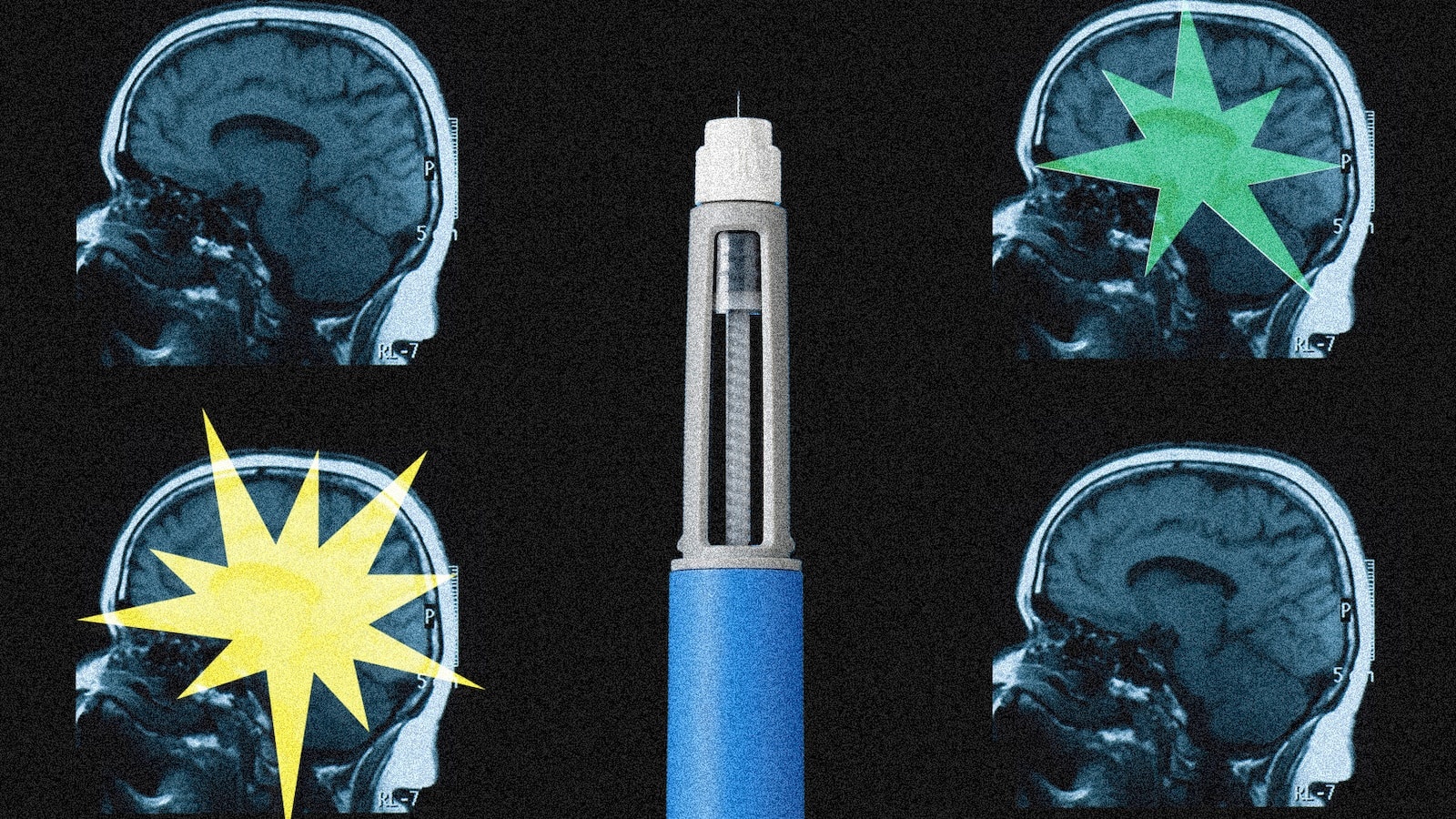
What began as a treatment for Type 2 diabetes and evolved into a global weight-loss phenomenon has quietly transformed into what neuroscientists are calling one of the largest unplanned brain experiments in human history.
Emerging clinical research indicates that GLP-1 receptor agonists (the class of drugs including Ozempic, Wegovy, and Mounjaro) do not just target the gut—they directly interface with, and potentially reshape, the human central nervous system.
The Neural Rewiring: Structural Changes Detected
For years, scientists knew GLP-1 drugs mimicked natural metabolic hormones to slow stomach emptying and signal fullness. However, pioneering neurological mapping is revealing a much deeper impact.
A landmark study led by Dr. Allison Shapiro, an assistant professor at the University of Colorado Anschutz Medical Campus, utilized advanced neuroimaging to scan the brains of teenagers and young women before and after starting GLP-1 therapy.
The Discovery: Within just a few months of treatment, the neural connections responsible for targeting attention and executive control had literally multiplied.
The human brain is dense with GLP-1 receptors, particularly in areas regulating reward pathways, impulse control, and emotional processing. By flooding these receptors, the drug appears to actively drive neuroplasticity—the brain’s ability to alter its physical structure and functional connections.
⚖️ The Dual Edge: Psychological Benefits vs. Anhedonia
Because these medications plug directly into the brain’s dopamine-driven reward center, patients are reporting profound psychological changes that have nothing to do with food.
The Upside: Silencing the “Brain Noise”
Millions of users report that the drug completely silences chronic, compulsive internal dialogues—often referred to as “brain noise.”
-
Addiction Interruption: By intercepting dopamine spikes, patients find themselves abruptly losing interest in alcohol, nicotine, and gambling. Clinical trials are now aggressively exploring GLP-1s as specialized anti-addiction therapies.
-
Mental Calm: Many experience a sudden easing of long-term anxiety and obsessive-compulsive tendencies.
The Downside: The Dopamine Deficit
Conversely, completely dampening the brain’s reward center comes with an emotional cost. A growing subset of patients describes a distinct state of anhedonia (the inability to feel pleasure) and emotional flattening. Because the brain no longer registers routine dopamine rewards, some individuals report a sharp drop in daily motivation, loss of interest in lifelong hobbies, mild brain fog, and diminished sexual desire.
Future Frontier: Fighting Alzheimer’s Disease
While neuroscientists remain cautious about the long-term cognitive impacts of permanently altering these neural networks, another massive silver lining has emerged: neuroprotection.
Early-stage clinical trials suggest that GLP-1 drugs significantly reduce neuroinflammation—a key driver of cellular damage. Crucially, early data shows that the medication can slow down the loss of brain volume in the frontal, temporal, and parietal lobes. Because these specific regions handle planning, memory, sensory integration, and emotional stability, researchers are fast-tracking studies to see if Ozempic-class compounds can permanently delay or even prevent the onset of Alzheimer’s disease and dementia.
As the scientific community races to map this uncharted territory, one reality is clear: these compounds are no longer just weight-loss tools. They are powerful, systemic psychoactive agents changing the way the human brain operates.
