

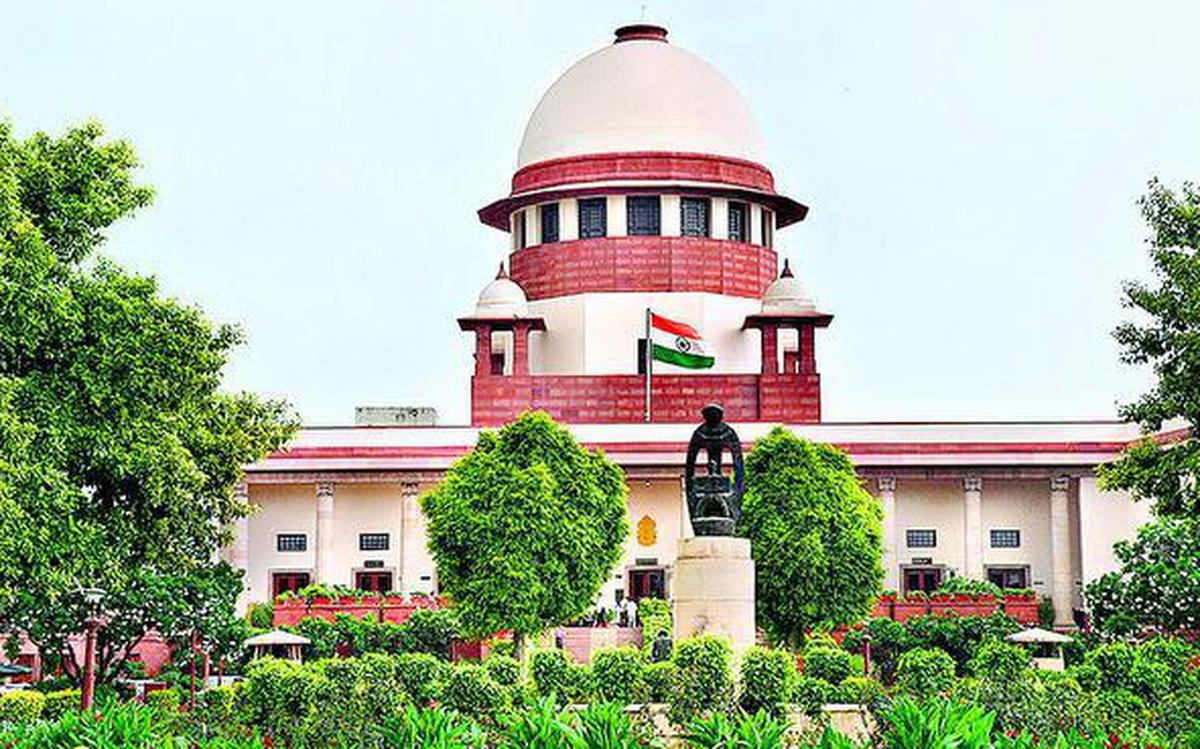
The Supreme Court of India is scheduled to deliver a landmark verdict today regarding the legality of the Election Commission of India’s (ECI) controversial Special Intensive Revision (SIR) of electoral rolls.
The judgment, to be pronounced by a bench comprising Chief Justice Surya Kant and Justice Joymalya Bagchi, follows a fierce political and legal showdown between the election watchdog and opposition parties over massive voter deletions.
What is the SIR Controversy?
The Special Intensive Revision (SIR) is an intensive voter verification process first launched by the ECI in Bihar in June 2025. The poll panel defends the exercise as a crucial step to maintain the “purity of electoral rolls” and ensure non-citizens do not vote.
However, the exercise has sparked intense pushback due to the scale of voter removals and the strict verification criteria:
-
Mass Deletions: Following the exercise, over 60 lakh voters were removed from the lists in Bihar. Ahead of the West Bengal elections, an additional 90 lakh voters were deleted.
-
The Legacy Requirement: Under SIR rules, voters who were not part of the 2002 or 2003 electoral rolls are required to furnish documentary proof linking them to individuals listed in those legacy rolls.
Why is it Being Challenged?
A batch of petitions was filed last year by civil rights groups—including the Association for Democratic Reforms (ADR) and the People’s Union for Civil Liberties (PUCL)—alongside prominent opposition MPs and activists.
The Petitioners’ Argument: Critics argue that the SIR effectively shifts the burden of proving citizenship onto existing, registered voters. They contend this creates an unconstitutional “suspended citizenship” regime.
During the extensive hearings, the Supreme Court made several notable observations, emphasizing that while the ECI holds the power to revise voter lists, its authority is not “untrammelled” and must adhere strictly to principles of natural justice and transparency.
The Broader Impact
The upcoming verdict carries massive constitutional and political stakes:
-
Past Elections: Major state elections, including those in Bihar and West Bengal, have already been conducted using the revised voter lists generated by this exercise.
-
Upcoming Phases: The ruling comes just days before the ECI is scheduled to launch the third and final phase of the SIR, which is set to span 16 states and three Union Territories starting May 30.
The court’s decision will ultimately define the limits of the Election Commission’s verification powers under Article 326 of the Constitution and the Representation of the People Act, 1950.
