

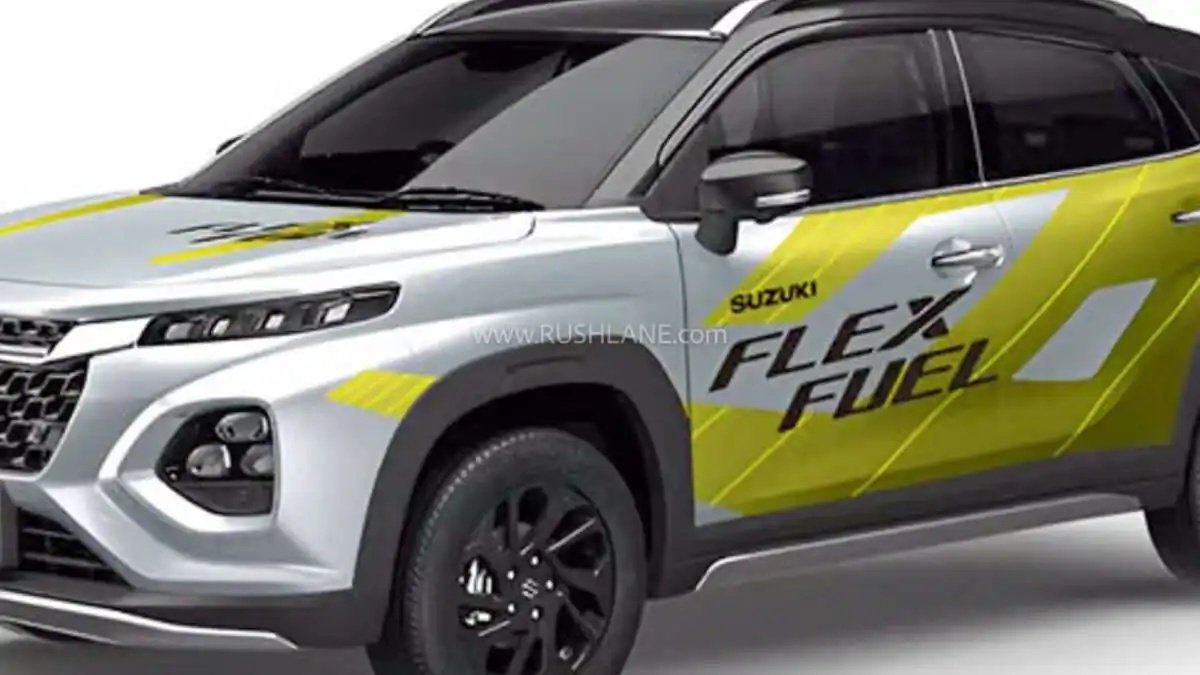
In a major step toward sustainable mobility, Union Minister for Road Transport and Highways Nitin Gadkari has announced that India’s largest carmaker, Maruti Suzuki, will launch its first 100% ethanol-powered (E100) flex-fuel car on World Environment Day (June 5, 2026). The vehicle—widely expected to be a production-ready version of the popular WagonR hatchback prototype—marks the first time a mainstream manufacturer is launching an E100-compatible four-wheeler in the Indian market.
What is E100 and How Does it Work?
Unlike regular fuel or minor blends, E100 consists of 100% pure bio-ethanol. While it cannot be used in a standard petrol engine due to ethanol’s highly corrosive nature, specialized flex-fuel engines are designed to adapt.
To handle E100, vehicles undergo significant component upgrades:
-
Modified Engine Calibration: Upgraded Engine Management Systems (EMS) and specialized fuel injectors manage the combustion of ethanol, which has a higher octane rating but lower energy density than petrol.
-
Corrosion-Resistant Components: Specially designed fuel lines, tank structures, and heating systems are integrated to withstand moisture absorption and chemical wear.
-
Cost Impact: Industry experts estimate these modifications will add an initial production premium of ₹40,000 to ₹70,000 per vehicle compared to standard petrol variants.
The Economic and Environmental Incentive
According to Gadkari, transitioning away from fossil fuels is critical since India currently imports 87% of its petrol, diesel, and gas.
“Our biggest pollution problem is fossil fuels. Ethanol is priced at ₹65 per litre, and compared to petrol and diesel, the effective fuel cost comes down to around ₹25 per litre. It is an import substitute, cost-effective, pollution-free, and indigenous.”
— Nitin Gadkari, Union Minister
The minister also highlighted that using bio-ethanol turns local farmers into “energy and fuel providers,” channeling fuel spending back into the domestic agricultural economy. While automakers like Toyota, Tata, and Mahindra have actively showcased flex-fuel prototypes, Maruti’s June rollout represents a massive step toward commercialization.
The Reality Check: Fuel Infrastructure Awaits
While the automotive technology is ready, Maruti Suzuki executives note that widespread adoption will be a long-term transition.
The primary hurdle remains commercial fuel availability, as E100 dispensing pumps are not yet widely established across India’s network of fuel stations. Because of this, initial sales volumes are expected to be minimal, with the sector projected to achieve meaningful mass-market scale over the next 5 to 10 years as the government concurrently pushes to expand national infrastructure and evaluate higher blending benchmarks (like E25 and E30).
