

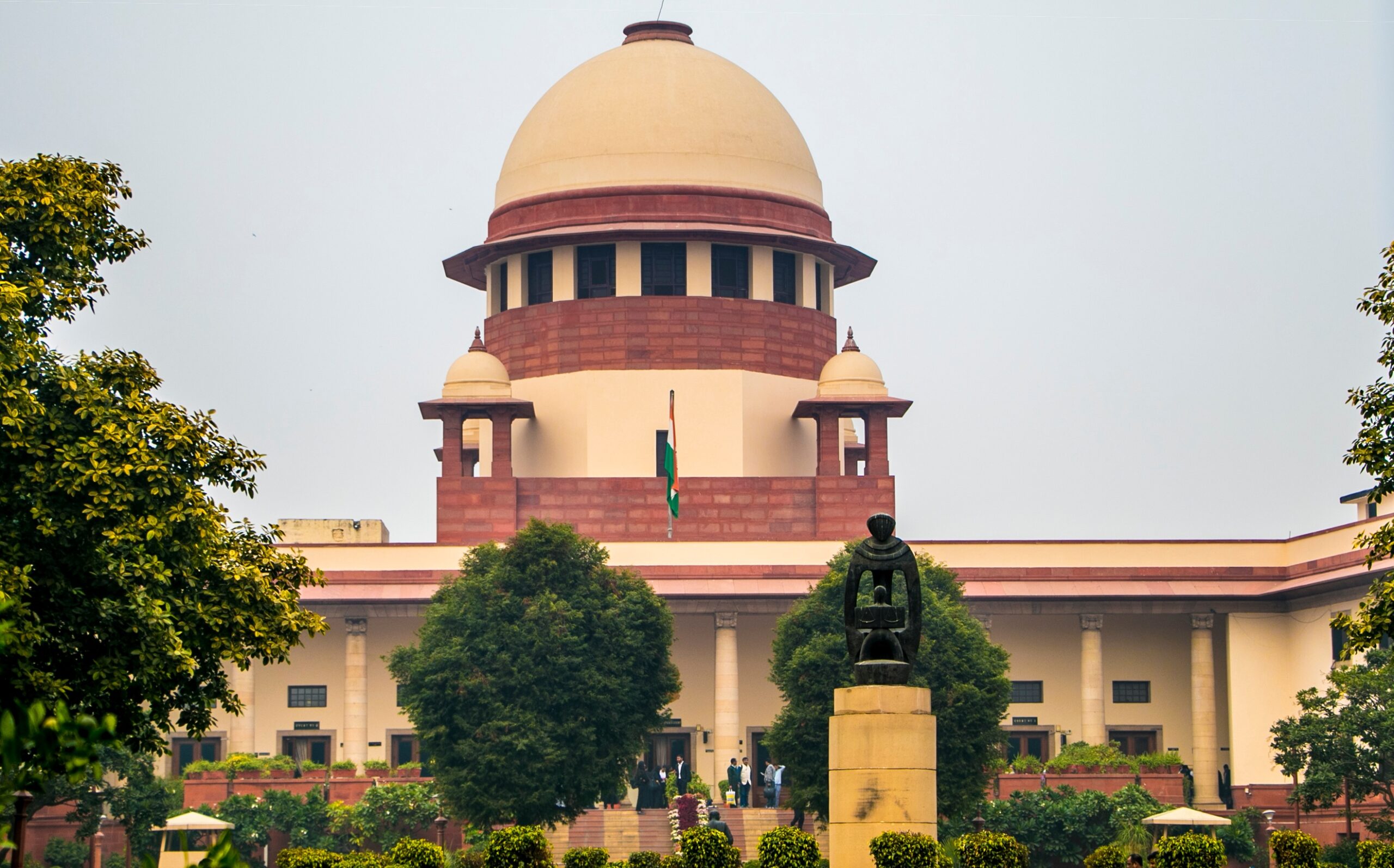
In a dramatic escalating institutional clash, the Supreme Court of India has turned its critical focus onto its own internal contradictions. A division bench comprising Justices Ujjal Bhuyan and B.V. Nagarathna has openly criticized a co-ordinate bench’s recent decision to deny bail to former JNU student leader Umar Khalid under the stringent Unlawful Activities (Prevention) Act (UAPA).
The public disagreement has exposed a widening philosophical rift within the top court, prompting the Delhi Police to formally request that the Supreme Court refer UAPA bail guidelines to a larger, authoritative bench to resolve “apparently conflicting” judgments.
The Core Conflict: Two Judges vs. Three Judges
At the heart of the standoff is a basic hierarchy rule in Indian jurisprudence: a smaller bench cannot ignore or dilute a ruling set by a larger bench.
Justice Bhuyan made the bench’s displeasure explicit while granting bail to a Jammu and Kashmir resident incarcerated since 2020: “They cannot dilute, circumvent, or disregard binding precedent.” The bench observed that the two judges who denied bail to Umar Khalid and Sharjeel Imam in January 2026 overstepped by bypassing a larger bench’s directive that “bail is the rule, jail the exception.”
The Evolution of UAPA Bail Jurisprudence
To understand how India’s anti-terror law became a judicial battlefield, it helps to track how the Supreme Court’s interpretation of Section 43D(5)—which bars bail if the prosecution’s case is prima facie true—has shifted over the last decade.
Why the Stakes Are So High
The legal debate centers on what qualifies as a “terrorist act” under Section 15 of the UAPA. The Parliament expanded this definition well beyond conventional weapons to include acts committed by “any other means” that paralyze civic or economic life.
The Structural Trap: Because defense lawyers are legally barred from introducing outside evidence to contradict the police chargesheet during a bail hearing, a Zahoor Watali interpretation practically ensures a total freeze on bail.
By labeling the January 2026 Umar Khalid logic and the 2024 Gurwinder Singh ruling as flawed deviations that improperly bypassed the Najeeb precedent, the Supreme Court has set up a mandatory showdown. The legal community now awaits a formal review by a larger constitution bench to permanently decide whether the statutory locks of the UAPA can indefinitely chain down the constitutional right to personal liberty.
