

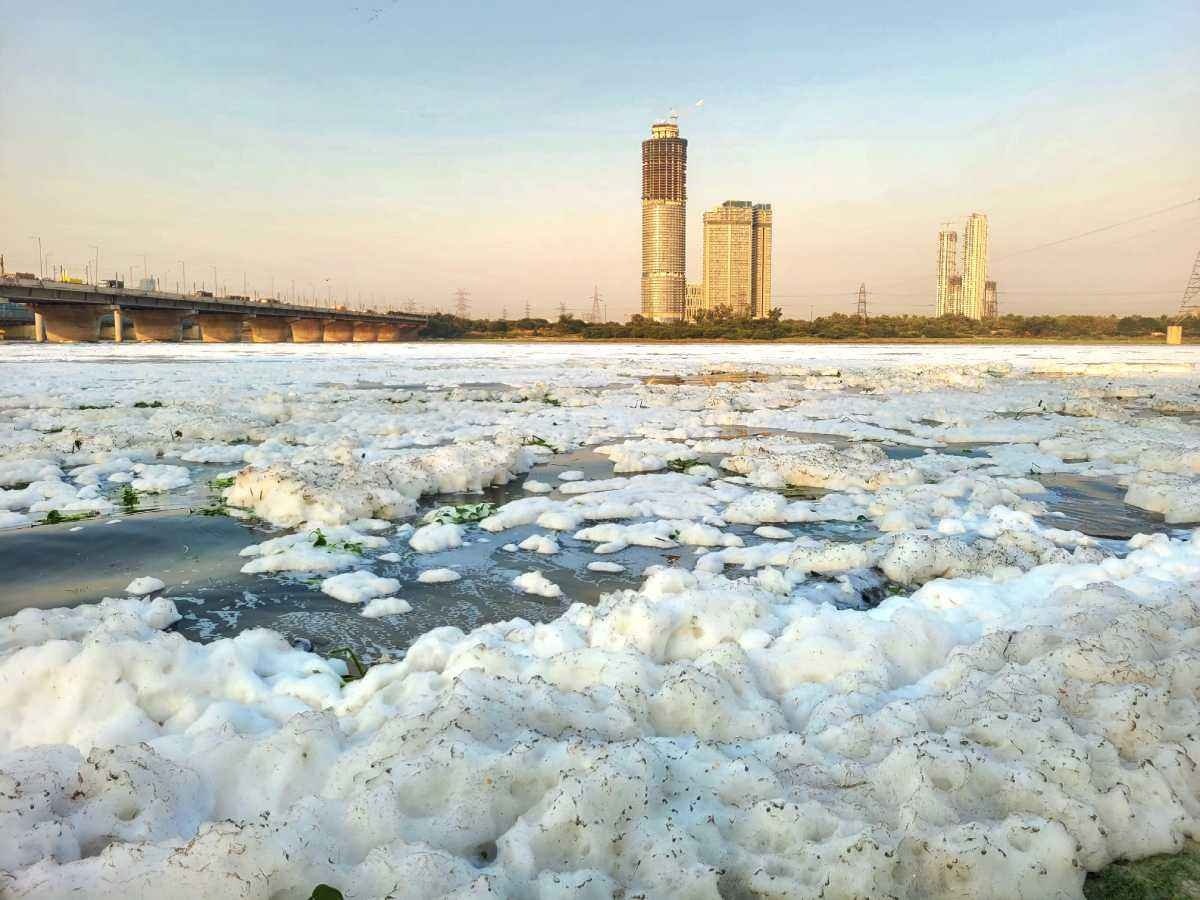
Despite Delhi experiencing its wettest April since 2010—with rainfall recorded at 147% above normal—the latest data from the Delhi Pollution Control Committee (DPCC) reveals that the Yamuna remains biologically “dead” across most of its Delhi stretch.
The report, based on samples from April 7, 2026, underscores a grim reality: increased water flow from rainfall is insufficient to dilute the sheer volume of untreated sewage and industrial waste entering the river.
The “Death” of the River: Oxygen Levels at Zero
The most critical indicator of a river’s health is Dissolved Oxygen (DO). For aquatic life to survive, DO should be at least 5 mg/l. Across nearly all major stretches within the city, the level was recorded at NIL.
| Stretch | DO Level (2026) | BOD Level (2026) | Status |
| Palla (Entry Point) | 5.2 mg/l | 3 mg/l | Healthy (Meets Standards) |
| ISBT Bridge | NIL | 48 mg/l | Critically Polluted |
| ITO Bridge | NIL | 40 mg/l | Critically Polluted |
| Nizamuddin Bridge | NIL | 34 mg/l | Critically Polluted |
| Hindon Cut | NIL | 84 mg/l | Severely Polluted |
| Asgarpur (Exit) | NIL | 58 mg/l | Severely Polluted |
Note: Biological Oxygen Demand (BOD) should ideally be below 3 mg/l. Levels in Delhi are currently up to 28 times the permissible limit.
Key Findings from the Report
1. The Palla Paradox
The river enters Delhi at Palla in a relatively healthy state. It is the only location where the river supports aquatic life. However, as it moves downstream, the influx of waste from 22 major drains rapidly chokes the water.
2. Worsening Contamination at ISBT
Contrary to expectations of rainfall-induced improvement, the ISBT Bridge stretch saw its BOD surge from 33 mg/l in 2025 to 48 mg/l in 2026. This indicates that the runoff may be carrying even more organic pollutants into the riverbed.
3. Extreme Sewage Levels
Faecal coliform levels (an indicator of human waste) are many times higher than the permissible limit of 500 MPN/100 ml. At Asgarpur, levels reached a staggering 3.1 lakh MPN/100 ml, posing significant health risks to anyone coming into contact with the water.
Why Rain Isn’t Cleaning the River
Environmental experts note that while rainfall increases the volume of water, it does not address the root causes:
-
Untreated Sewage: A significant portion of Delhi’s daily sewage discharge still enters the river without proper treatment.
-
Industrial Discharge: Heavy metals and toxic chemicals from industrial clusters continue to bypass treatment plants.
-
Inadequate Flow: Even with “above-normal” rain, the river lacks the sustained ecological flow required to flush out settled toxins from the riverbed.
The Road Ahead
The DPCC report serves as a stark reminder that infrastructure—specifically the expansion of Sewage Treatment Plants (STPs) and interceptor sewers—is the only sustainable solution. Reliance on seasonal weather patterns to “clean” the Yamuna has proven, once again, to be a failed strategy.
