

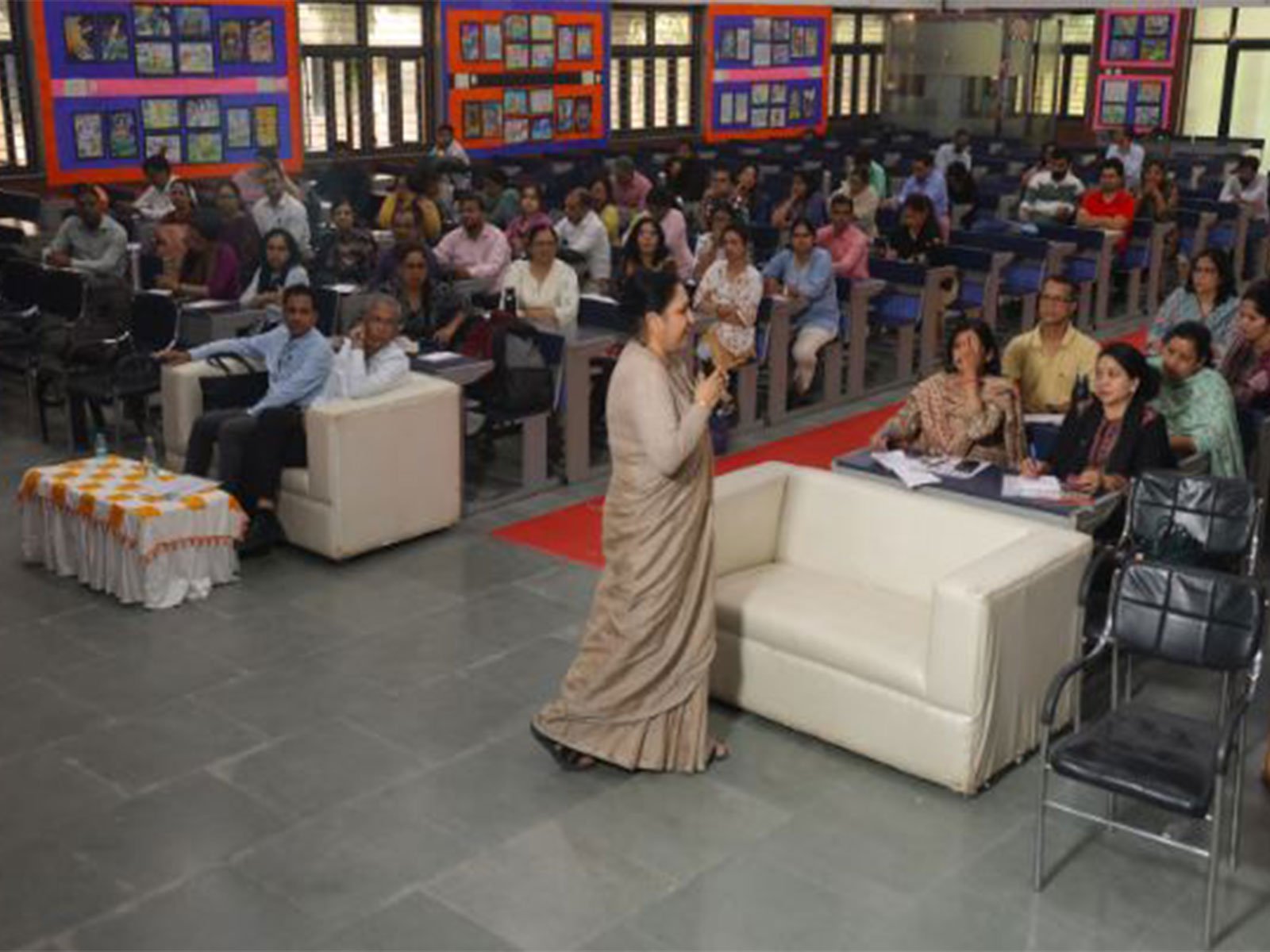
New Delhi [India], November 11 (ANI): The National Council of Educational Research and Training (NCERT), in collaboration with the State Council of Educational Research and Training (SCERT), Delhi, under the Samagra Shiksha initiative, organised a five-day capacity-building programme under ‘Reimagined NISHTHA’ (National Initiative for School Heads’ and Teachers’ Holistic Advancement), in alignment with the National Education Policy (NEP) 2020.
The programme, aimed at the Foundational, Preparatory and Middle Stages of school education, was held from November 2 to 6, 2026, at Shaheed Hemu Kalani Sarvodaya Bal Vidyalaya, Lajpat Nagar, New Delhi. More than 100 resource persons from the National Capital Territory of Delhi participated in the programme.
These trained resource persons will serve as members of the State Resource Group (SRG) and play a significant role in strengthening teachers’ capacities during the subsequent phases of the NISHTHA programme.
The programme was inaugurated by NCERT Director Dinesh Prasad Saklani as the chief guest. In his inaugural address, he emphasised the need to prepare teachers in accordance with the evolving curriculum and pedagogical approaches envisaged under NEP 2020.
He appreciated the support extended by the Delhi government in organising the programme and said that NISHTHA would be implemented extensively across the country for these stages of school education. He stressed that such training programmes should not remain mere formal exercises but must translate into a positive impact reaching every school and every student.
He further stated that the effective implementation of the new textbooks developed by NCERT in accordance with the recommendations of NEP 2020 would be possible only through competent and well-trained teachers. Encouraging the participants, he expressed confidence that NISHTHA would play an important role in developing essential competencies among teachers and improving the overall quality of school education.
Director of SCERT Delhi, Jatin Goyal, also attended the inaugural session. He shared details of various initiatives being undertaken to improve the quality of school education. Emphasising the critical role of teachers in the holistic development of learners, he said that continuous professional development was essential in the changing educational landscape. He also expressed gratitude to NCERT for organising the important capacity-building programme for teachers in Delhi.
Ranjana Arora, Head of the Department of Curriculum Studies and Development at NCERT and National Coordinator of the NISHTHA programme, presented an overview of the programme’s objectives, methodology and detailed five-day training schedule.
She subsequently highlighted various aspects of NEP 2020, the National Curriculum Framework for the Foundational Stage (NCF-FS) 2022 and the National Curriculum Framework for School Education (NCF-SE) 2023. She emphasised that a deeper understanding of these policies and curriculum frameworks was essential to bringing about the desired transformation in school education. She particularly stressed that the real impact of these policy and curricular provisions would be visible only when they were effectively translated into classroom teaching-learning processes.
The primary objective of the five-day programme was to strengthen participants’ understanding of NEP 2020, the National Curriculum Frameworks and the newly developed textbooks, while enhancing their pedagogical skills.
Around 18 sessions were conducted during the programme, covering key themes such as NEP 2020, National Curriculum Frameworks, school culture and leadership, digital education, play-based learning, Jadui Pitara, inclusive education, student well-being, stage-specific and subject-specific pedagogies, assessment processes and the Holistic Progress Card (HPC).
Participants actively engaged in group activities, interactive presentations, and the development of classroom action plans, thereby enhancing their understanding and professional skills. The sessions were conducted by approximately 25 members of NCERT’s National Resource Group (NRG).
Suniti Sanwal introduced resource persons for the Foundational and Preparatory Stages to the concepts of Jadui Pitara and play-based learning through engaging, activity-oriented and practical approaches.
The programme placed special emphasis on experiential, activity-based and learner-centric pedagogies. It highlighted that subject knowledge alone was not sufficient to improve the quality of school education. Teachers also needed to understand children’s diverse learning needs, interests, abilities and socio-cultural contexts.
Through discussions and activities, the importance of creating inclusive, joyful and participatory classroom environments was underlined. The programme also highlighted how holistic assessment and regular feedback on students’ progress could contribute to making teaching-learning processes more effective.
An important feature of the NISHTHA programme is its approach of expanding capacity-building efforts on a large scale through trained resource persons. In this context, members of the State Resource Group have a particularly significant role to play.
These resource persons are expected to actively disseminate the knowledge, experiences and pedagogical perspectives gained during the training to teachers in their respective areas. The actual success of the programme will depend on translating the understanding gained during the training into everyday teaching-learning practices in schools and encouraging teachers to adopt innovation, reflective practices and continuous professional development.
The initiative, therefore, represents an important step towards translating the vision of NEP 2020 into meaningful changes at the school and classroom levels.
The programme concluded with a valedictory session chaired by NCERT Dean (Coordination) Shridhar Srivastava. On the occasion, Sukhwinder presented the proposed framework for upcoming teacher-training programmes in the state. A post-training survey was also conducted during the concluding session.
The programme concluded with a renewed commitment to translating the vision of NEP 2020 into meaningful classroom teaching-learning practices and ensuring that the knowledge and experiences gained during the training reach schools at the grassroots level.
The programme was coordinated by Sukhwinder, Anand Arya and Monu Singh Gurjar from NCERT. Angel Rathnabai and the technical team of CIET-NCERT provided technical coordination support.
From SCERT Delhi, Joint Director Mukesh Yadav, Sanjay Kumar and Sonia Kakkar made valuable contributions to the successful organisation of the programme.
Organised through the joint efforts of NCERT and SCERT Delhi, the programme emerged as an important initiative towards strengthening teachers’ professional development, deepening their understanding of curricular reforms and promoting quality school education. (ANI)
