

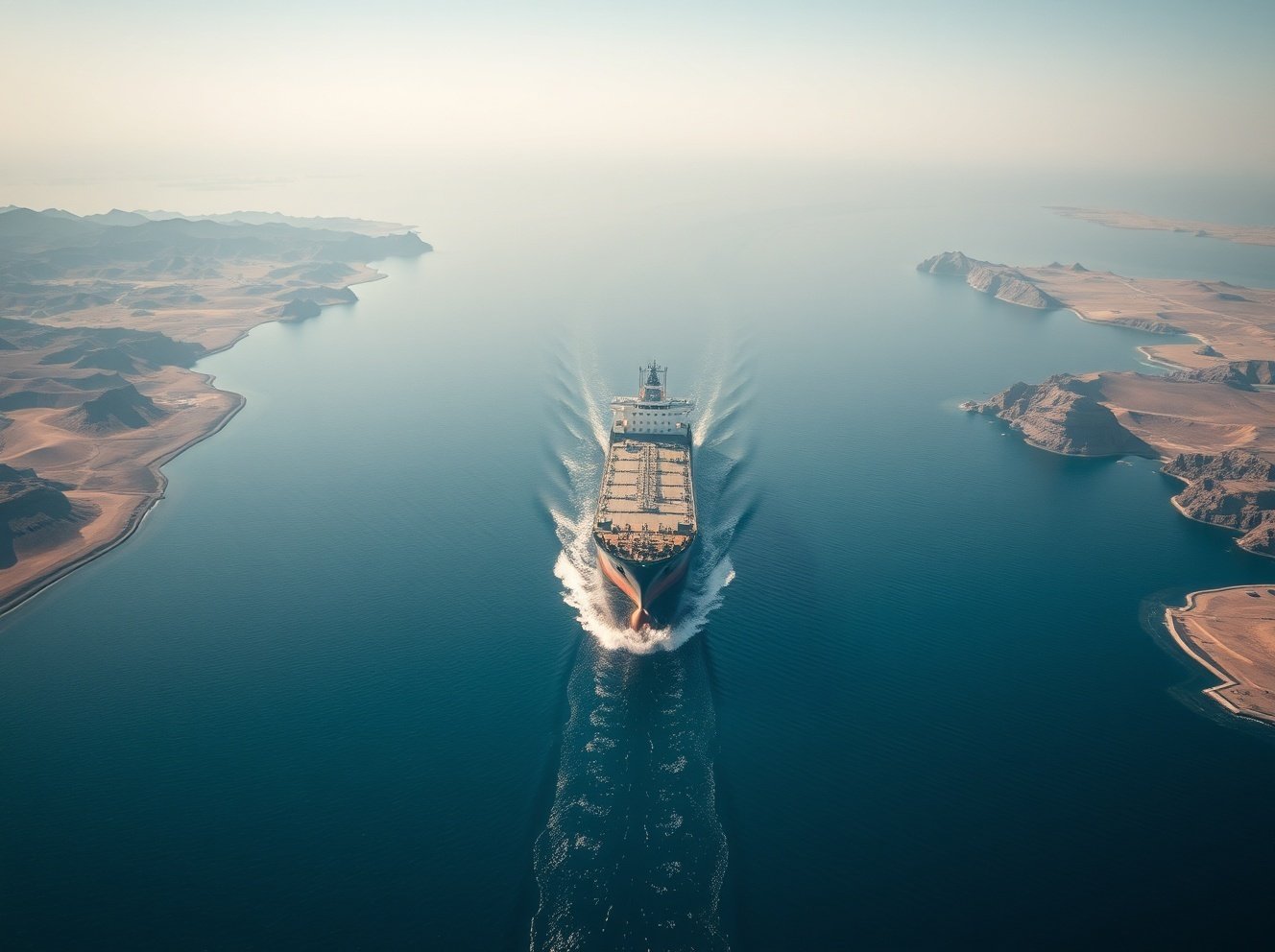
In a significant development for global energy markets, three massive vessels managed by the Oman Ship Management Company appear to have successfully navigated the blockaded Strait of Hormuz by “hugging” the Omani coastline. This move marks the first time a Liquefied Natural Gas (LNG) carrier and ultra-large oil tankers have attempted to bypass the traditional, now Iran-controlled, northern shipping lanes since the conflict escalated in February 2026.
The “Southern Bypass”: A High-Stakes Maneuver
While Iran has effectively seized control of the northerly transit paths—demanding “tolls” of up to $2 million per voyage—these three ships charted a different course:
-
The Route: The vessels stayed south of the standard designated lanes, moving close to the Musandam Peninsula (Omani territory) rather than passing between Iran’s Larak and Qeshm islands.
-
The Vessels: * Two Supertankers: Each hauling approximately 2 million barrels of crude oil. One is reportedly bound for Kyaukpyu, Myanmar, to supply a pipeline into Western China.
-
One LNG Carrier: The first gas vessel to attempt an exit since the war began. It appears to be traveling empty.
-
-
The Disappearance: All three ships stopped broadcasting their automated position signals (AIS) around 9:30 AM London time on Thursday. Experts suggest this is likely due to intense signal jamming and spoofing prevalent in the war zone.
Why This Route Matters
The traditional northern route through Iranian waters is not only politically compromised but physically challenging for the world’s largest ships.
| Feature | Iranian (Northern) Route | Omani (Southern) Route |
| Status | Controlled by Tehran; “Tolls” applied | Contested; Hugs Omani coastline |
| Depth | Shallower; tighter turns | Deeper; suited for Supertankers |
| Political Risk | High (subject to Iranian protocol) | High (proximity to conflict/jamming) |
Tehran’s “Tolling” Ambitions
The escape comes as Iran’s Deputy Foreign Minister, Kazem Gharibabadi, announced that Tehran is drafting a new protocol with Oman to “monitor” all traffic. Iran is increasingly treating the Strait as a revenue source, seeking massive payments from merchant shipping to fund its war efforts and offset international sanctions.
Global Impact: Energy Prices and Pressure on Trump
The successful (though unconfirmed) transit of these ships is being watched closely by global markets. With the Strait of Hormuz handling 20% of the world’s energy supply, its closure has sent oil prices into a tailspin.
The pressure is mounting on US President Donald Trump, whose administration is facing criticism as Intel reports suggest his claims of “knocking out” Iranian capabilities may have been premature.
Title: Strategic Breakthrough at Hormuz: Omani Tankers Chart New Path to Evade Iran’s $2M ‘Toll’
