

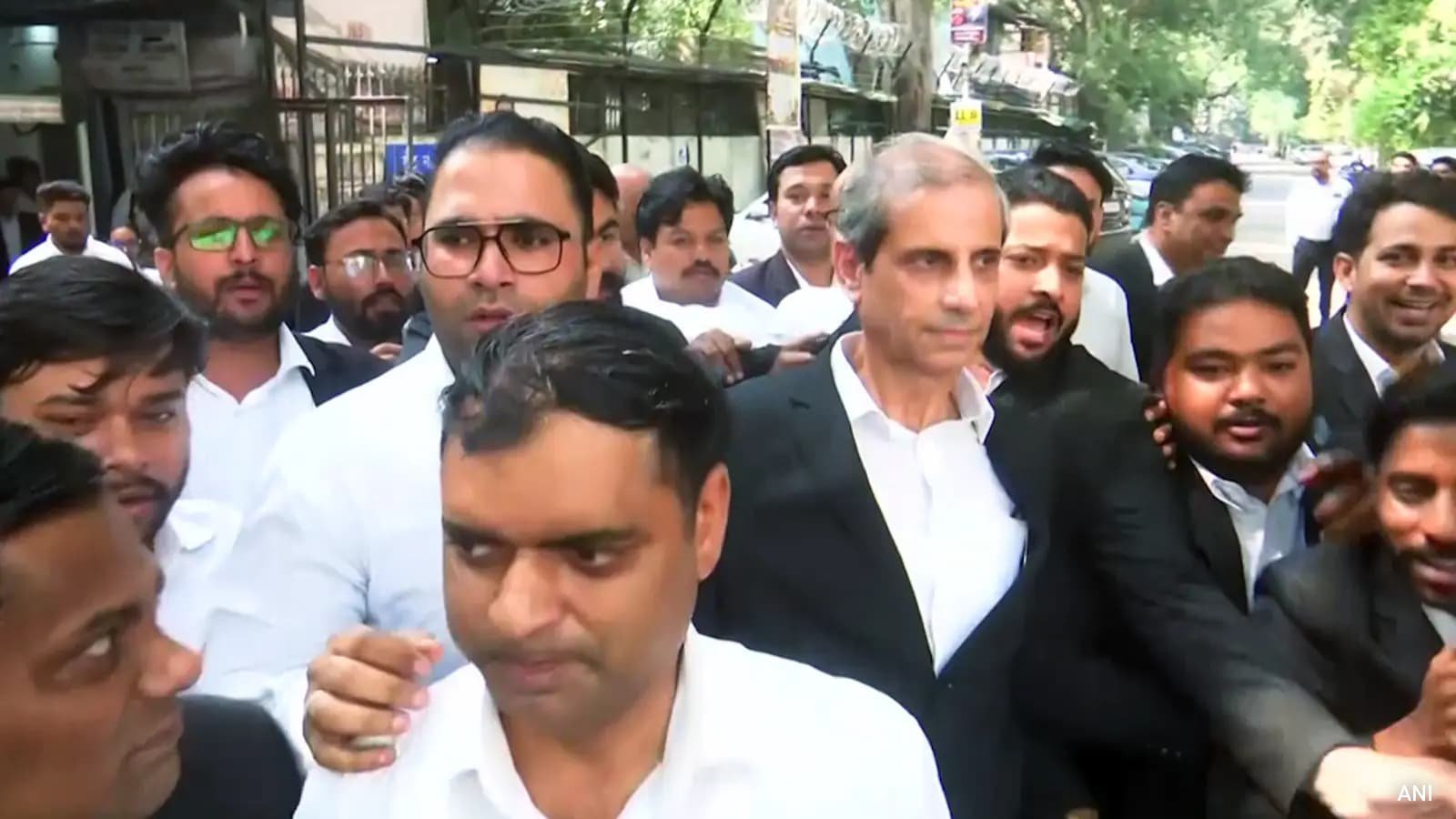
Chief Justice of India (CJI) Surya Kant affirmed on Monday that every lawyer and member of the Bar possesses the fundamental right to participate in peaceful protests at designated locations. The remarks came during a courtroom mentioning where senior advocates flagged instances of police force, missing prohibitory orders, and the detention of senior members of the legal community during ongoing demonstrations against Chief Election Commissioner Gyanesh Kumar.
A three-judge bench comprising CJI Surya Kant, Justice Joymalya Bagchi, and Justice V. Mohana agreed to hear petitions filed by the Supreme Court Bar Association (SCBA) and other stakeholders on Tuesday.
Key Points & Court Proceedings
1. Affirmation of Democratic Rights
Reiterating the constitutional guarantee to assemble peacefully, CJI Surya Kant stated:
“Every lawyer, every member of the Bar has the right to be a part of the peaceful protests, wherever the identified locations are there.”
However, the Chief Justice also emphasized that while democratic activities must take place peacefully, the Supreme Court’s regular judicial functioning should continue without disruption or being dragged into political disputes.
2. Serious Allegations of Police Excesses
Senior Advocate Gopal Sankaranarayanan brought several alarming incidents to the bench’s attention, alleging high-handedness by law enforcement agencies during recent demonstrations:
-
Treatment of Senior Counsel: He highlighted that Senior Advocate Shadan Farasat was physically dragged through the streets, describing the event as “most unseemly.”
-
Detentions: Senior Advocates Dinesh Dwivedi and Uttara Babbar were reportedly detained inside police buses during the agitations.
-
Missing BNSS Orders: Counsel pointed out that no orders under Section 163 of the Bharatiya Nagarik Suraksha Sanhita (BNSS)—which governs public assembly restrictions—were available in the public domain, making it difficult for citizens and legal professionals to ascertain designated boundaries.
-
Third-Party Attacks: Sankaranarayanan alleged that private hooligans were attacking peaceful protesters—including hitting children with lathis—while police failed to intervene, adding that video evidence would be presented to the bench.
3. Recent Supreme Court Directives
The oral observations follow a special Sunday sitting by the apex court, where interim protections were passed to uphold civil liberties during public agitations:
-
Prohibition of Illegal Detentions: Directed law enforcement to refrain from illegally detaining unarmed citizens.
-
Protection for Professionals: Explicitly ordered that lawyers, journalists, and other professionals must not be hindered from carrying out their professional duties or accessing courts.
-
Unrestricted Services: Ordered that public transit (such as the Delhi Metro) and internet services remain operational to ensure unhindered public movement.
What Lies Ahead
The Supreme Court has scheduled the matter for a detailed hearing on Tuesday, October 13, 2026. The bench is expected to examine video evidence of the alleged police excesses, review the legal validity of BNSS Section 163 notifications, and consider issuing comprehensive guidelines regarding the protocol for handling peaceful demonstrations involving members of the Bar.
