

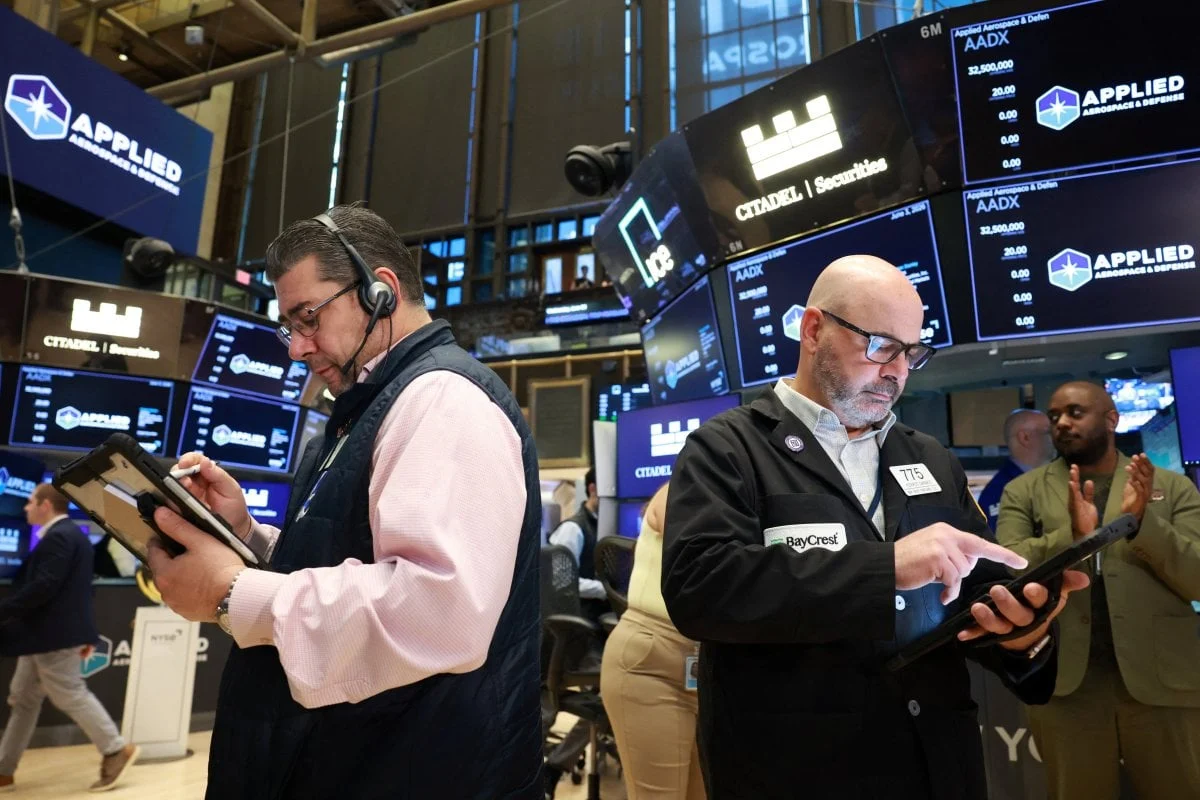
Despite Friday volatility driven by a selloff in semiconductor stocks and hawkish commentary from Federal Reserve Chair Kevin Warsh, major U.S. stock indices closed the week of August 24–29 with net gains. The Nasdaq Composite led the rally, outperforming both the Dow Jones Industrial Average and the S&P 500.
Weekly Index Performance
-
Nasdaq Composite: Rose 1.3% (+337.10 points) to close at 26,402.42.
-
S&P 500: Increased 0.63% (+48.38 points) to end at 7,711.76.
-
Dow Jones Industrial Average: Advanced 0.60% (+298.04 points) to finish at 53,559.99.
Friday Market Movers and Stock Action
Friday saw a pullback as chipmaker selloffs and rising expectations of a central bank rate hike weighed on benchmark indices. While several mega-cap technology companies posted gains, the broader semiconductor sector faced downward pressure.
-
Mega-Cap Tech Gains: Meta surged over 15%, Amazon jumped 4%, Microsoft gained nearly 2%, and Alphabet rose roughly 1.5%.
-
Semiconductor Declines: Nvidia dropped 5% despite beating Q2 earnings expectations. Marvell plunged over 10% following its earnings report, AMD declined over 2%, and Broadcom fell nearly 1%.
Key Catalysts: Jackson Hole, Earnings, and Geopolitics
Federal Reserve Policy Outlook At the Jackson Hole summit, Fed Chair Kevin Warsh signaled concern regarding price stability and rising commodity prices, reinforcing a hawkish stance. Warsh emphasized that the central bank relies heavily on unfiltered market indicators—including Treasury yields, asset prices, exchange rates, and credit availability—to assess economic risks. While acknowledging that S&P 500 corporate profits grew over 20% over the past year with elevated margins, his comments increased market expectations for an upcoming interest rate hike.
Q2 Earnings Season Wrap-Up Data from Charles Schwab indicates that the second-quarter earnings season is nearly complete, with 485 S&P 500 companies having reported:
-
Top-Line Performance: 69% of companies beat revenue estimates, driving overall revenue growth to 14.99%.
-
Bottom-Line Performance: 88% surpassed earnings-per-share (EPS) estimates, pushing aggregate EPS growth to 52% (or 26–29% when excluding one-time investment gains from mega-cap tech).
Geopolitical Developments Markets also monitored Middle East tensions following the U.S. Department of the Treasury’s launch of “Operation Economic Outcast,” a campaign aimed at restricting economic channels linked to Iran.
