

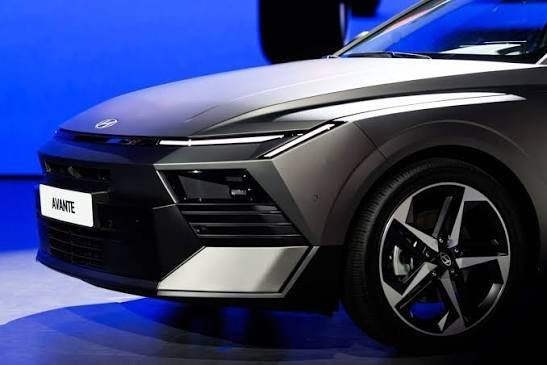
At its 2026 CEO Investor Day, Hyundai Motor Company rolled out one of the most aggressive global product offensives in the automotive sector. As part of a strategy to introduce or refresh over 100 models worldwide and hit 5.55 million global sales by 2030, India has emerged as a cornerstone of the automaker’s future growth. With 26 model interventions slated for the Indian market, a major push toward 90 percent local content sourcing, and an upcoming wave of region-specific electric and internal combustion vehicles, Hyundai is signaling that it intends to dig deep in one of the world’s most fiercely contested automotive arenas.
A Multi-Powertrain Bet Grounded in Reality
Unlike carmakers that rushed headfirst into an all-EV strategy only to encounter consumer hesitation and lagging charging infrastructure, Hyundai is embracing a pragmatic, multi-powertrain approach. The company is simultaneously investing in petrol, hybrid, battery-electric, and extended-range electric vehicle (EREV) technologies.
For India, where EV adoption is steadily rising but still constrained by infrastructure and price sensitivity outside early-adopter brackets, this flexibility is vital. Hyundai’s localized approach is headlined by an all-new electric SUV engineered specifically for India, featuring next-generation infotainment and Level 2 advanced driver-assistance systems (ADAS), slated to debut in the fourth quarter of 2026. Alongside electrification, the company remains committed to the combustion engine, confirming a new ICE-powered midsize SUV to complement its robust utility vehicle lineup.
Deepening Local Roots and Export Ambitions
Manufacturing strength remains Hyundai’s strongest shield in India. Building on an already massive industrial footprint, the company plans to scale up its local manufacturing capacity by an additional 320,000 units, targeting a total production output backed by a network of over 1,400 local suppliers.
To insulate itself against currency fluctuations and supply chain disruptions, Hyundai aims to source 90 percent of its vehicle components locally by 2030. Furthermore, India is not just a consumer market in Hyundai’s calculus; it functions as a primary export hub. The automaker expects roughly 30 percent of its Indian production volume to be exported to emerging markets across Africa, the Middle East, South America, and the broader Asian region.
Navigating an Unforgiving Competitive Landscape
Despite its impressive blueprint, Hyundai faces a radically different market than the one it comfortably dominated over the past two decades. The Indian passenger vehicle space is growing increasingly crowded and cutthroat.
While Maruti Suzuki aggressively pushes into higher-end segments, Mahindra continues to dominate robust SUV sub-segments, and Tata Motors commands a formidable presence in the electric vehicle and fleet sectors. Meanwhile, Toyota’s hybrid momentum and a wave of aggressive new global and Chinese-linked entrants are shifting consumer expectations. Features that once set Hyundai apart—such as large touchscreens, connected-car tech, and panoramic sunroofs—have rapidly transitioned from luxury differentiators to basic market expectations.
The Road Ahead
Hyundai’s 2030 roadmap is an exercise in calculated industrial ambition. Its localized manufacturing investments, supply chain depth, and flexible powertrain choices demonstrate a clear understanding of market evolution. However, quantity alone via 26 launches will not secure leadership. In a landscape as dynamic and unforgiving as India’s, Hyundai’s ultimate success will depend on precise product positioning, aggressive pricing discipline, and maintaining a competitive edge where software, value, and customer loyalty intersect.
