

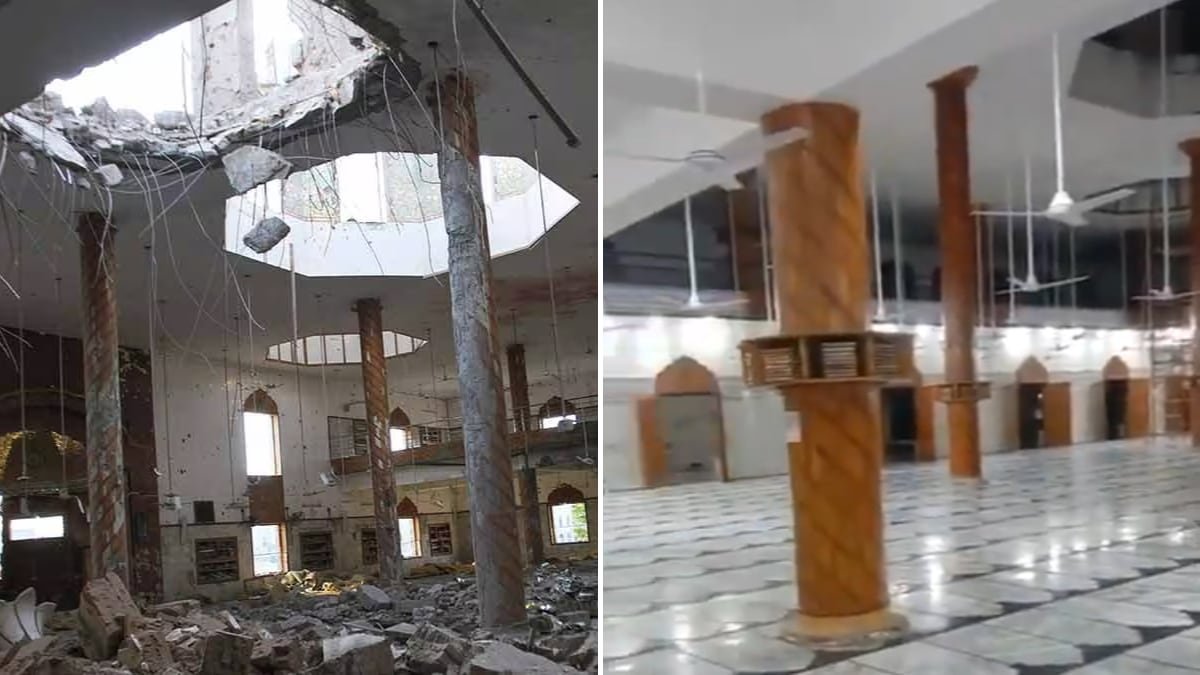
Visuals accessed by intelligence agencies confirm that the primary headquarters of the UN-sanctioned terror group Jaish-e-Mohammed (JeM)—the Markaz Subhanallah complex in Bahawalpur—has been completely restored. The compound was severely damaged during India’s retaliatory precision strikes under Operation Sindoor in May 2025.
Key Reconstruction Details & Intelligence Inputs
The extensive structural restoration reflects a rapid rebuilding effort across the facility:
-
Structural Renovation: The scarred central hall and blast zones have been repaired, filled with concrete, and surfaced with premium marble flooring, fresh plaster, and new paint to erase physical signs of missile strikes.
-
Demolition of Satellite Units: Damaged outer structures—including the Madrasa Al-Sabir, which served as a primary indoctrination center, and housing quarters for commanders—were completely cleared to make way for new administrative and residential buildings.
-
Alleged PKR 25 Crore State Funding: Intelligence reports state that the Pakistani establishment channeled PKR 25 crore in cash installments to JeM, with approximately PKR 11 crore dedicated specifically to restoring the central complex.
Command Structure Shift & Leadership Status
| Figure | Role / Identity | Current Status & Location |
| Masood Azhar | Founder & Chief, Jaish-e-Mohammed | Incapacitated by chronic illness; harbored in Nawabshah, Sindh. |
| Rauf Asghar | Operational Commander | Operating alongside Azhar under state protection in Sindh. |
| Talha Al-Saif | Brother of Masood Azhar | Assumed active operational command of the Bahawalpur complex. |
| Mohinuddin Aurangzeb (Ammar Alvi) | Brother of Masood Azhar | Co-managing day-to-day administration at Markaz Subhanallah. |
Strategic Implications for Indian Security
Indian defense officials note that while Operation Sindoor successfully disrupted JeM’s operational capabilities, the rapid reconstruction of Markaz Subhanallah indicates that the infrastructure sustaining cross-border terrorism remains intact. New Delhi maintains that the project serves as clear evidence of Pakistan’s continued patronization of terror groups targeting India.
