

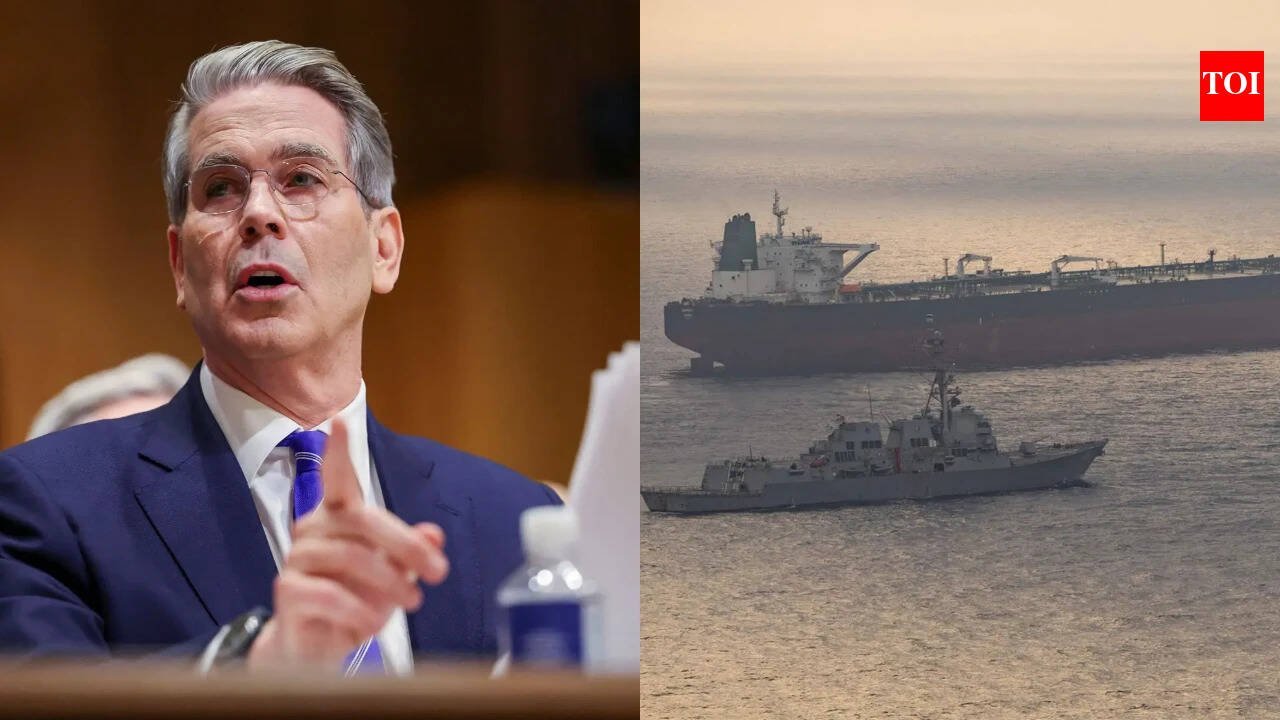
Tensions between the United States and Iran have escalated sharply as Washington prepares to roll out an aggressive financial campaign designed to cut off Tehran’s access to international trade and financial markets. The planned sanctions rollout has drawn immediate threats of retaliation from Iranian officials regarding crude oil transits through the Persian Gulf.
The U.S. Mandate: “Economic D-Day”
In an op-ed published in the Financial Times ahead of a scheduled press conference on Monday, U.S. Treasury Secretary Scott Bessent outlined an aggressive financial push against the Iranian government:
-
Targeting Third-Party Trade: The United States is targeting nations and foreign entities that continue to purchase Iranian petroleum, process seaborne fuel transfers, or facilitate banking access for Tehran.
-
Leveraging Secondary Sanctions: Countries doing business with Iran—most notably China, which accounts for over 80% of Iran’s exported crude—face severe secondary sanctions designed to sever international financial connections.
-
Aiming for Isolation: U.S. officials stated the objective is to “sever every economic lifeline that sustains the regime” to force Tehran into comprehensive negotiations.
Iran’s Counter-Threat: Gulf Maritime Blockade
Tehran has denounced the proposed measures as an illegal violation of international law and extraterritorial overreach. In response to the economic measures, Iranian defense and security officials issued severe warnings:
-
Strait of Hormuz Retaliation: Mohsen Rezaei, Secretary of Iran’s Supreme National Security Council, warned that if the U.S. economic campaign proceeds, Iran will ensure “not a single drop of oil will be exported, neither through the Strait of Hormuz nor anywhere in the Persian Gulf”.
-
Declaration of Conflict: Iranian leadership stated that any country participating in or aiding the U.S. economic operation will be treated by Tehran as engaging in an direct act of war.
Key Stakeholder Perspectives
| Entity | Position / Stance | Primary Action / Strategy |
| United States | Financial isolation & secondary sanctions enforcement | Enforce secondary sanctions on foreign institutions trading with Tehran. |
| Iran | Rejection of sanctions & maritime deterrence | Threaten a complete halt to Persian Gulf crude oil exports through the Strait of Hormuz. |
| China | Opposition to unilateral sanctions; calls for diplomacy | Maintains primary buyer status for Iranian crude exports while advocating peace talks. |
| Global Energy Markets | High volatility amid maritime security risks | Tracking potential supply disruptions across vital energy transport bottlenecks. |
Economic Impact and Diplomatic Calls
While military strikes between the two nations have paused in recent weeks, energy markets remain volatile due to existing shipping disruptions in the Strait of Hormuz—a vital bottleneck for roughly 20% of the world’s seaborne oil supply.
Iranian President Masoud Pezeshkian and international partners like China continue to call for a diplomatic resolution to end the six-month conflict, even as both Washington and Tehran maintain uncompromising public positions ahead of formal policy announcements.
