

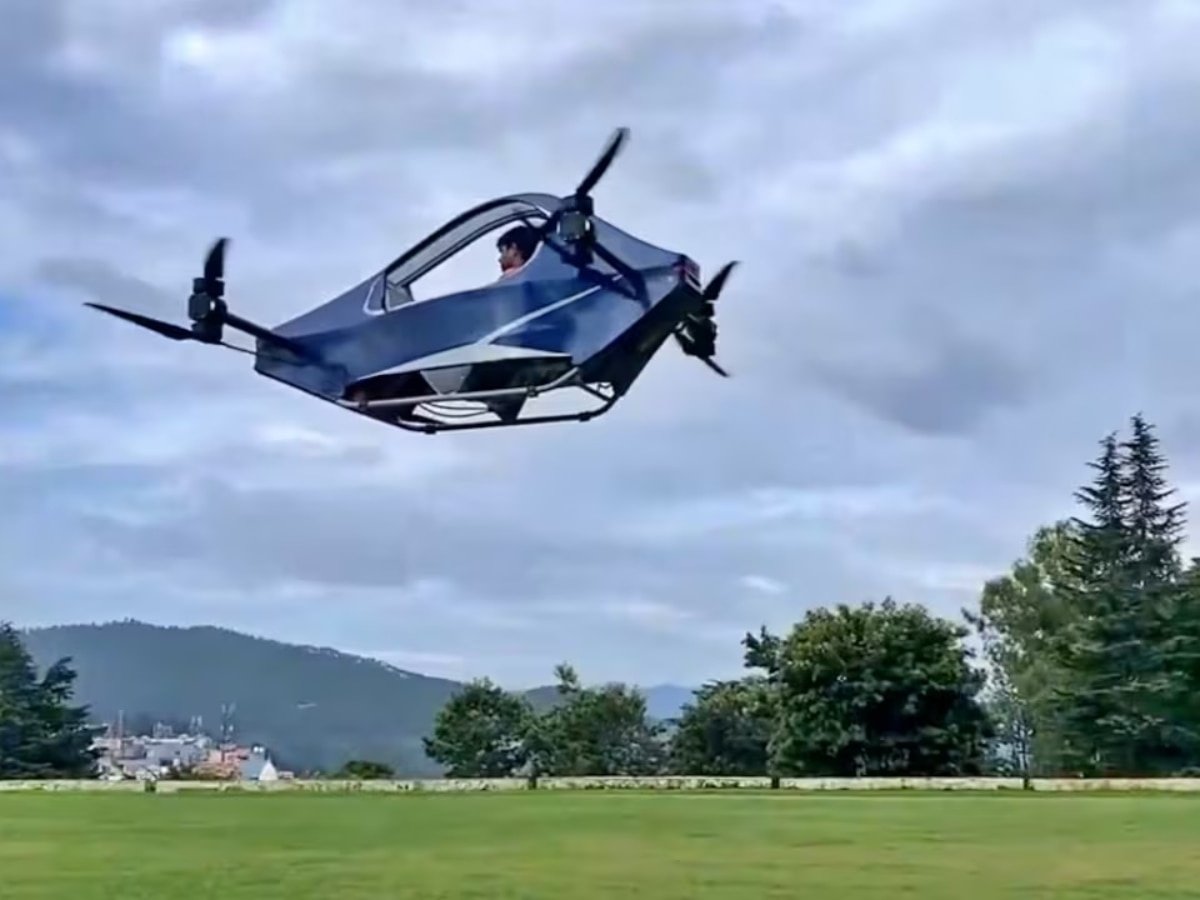
In a major milestone for grass-roots innovation, Ravi Tamta from Kaflikhan village in Almora, Uttarakhand, has captured national attention after successfully test-flying a single-seater electric aerial prototype. Developed under his startup, Hapida Sky, the vehicle—named the HAPIDA SKYNeX—leverages scaled-up multi-rotor drone technology capable of carrying a human passenger.
Tackling Mountain Travel Challenges
The inspiration behind the project stems from the daily travel struggles unique to hilly terrain:
-
Current Road Reality: A typical 40-kilometer journey through winding mountain roads can take nearly 90 minutes.
-
Sky Mobility Vision: The HAPIDA SKYNeX is designed to cut that same travel time down to just 10 to 15 minutes.
Tamta envisions his prototype evolving beyond an experiment into a practical, everyday personal transportation solution for remote regions where road travel is slow and challenging.
Technical Overview & Design
While detailed technical parameters—such as battery capacity, top speed, flight duration, and payload limits—remain undisclosed, key design features include:
-
Powertrain: Fully electric system aimed at clean, zero-emission transit.
-
Architecture: Compact multi-rotor configuration derived from drone engineering.
-
Layout: Single-seat setup designed to prioritize fundamental lift, balance, and flight controls before scaling to advanced builds.
The Road Ahead: Next Steps & Hurdles
Although the preliminary test flight on open ground in Almora marks a major milestone, the vehicle remains in its early development phase. Moving from a working prototype to a consumer-ready vehicle involves several critical hurdles:
-
Extensive Flight Testing: Rigorous evaluation of stability, reliability, and control under varied mountain weather conditions.
-
Regulatory Clearances: Securing aviation permissions, strict safety certifications, and navigating airspace regulations for personal air mobility.
