

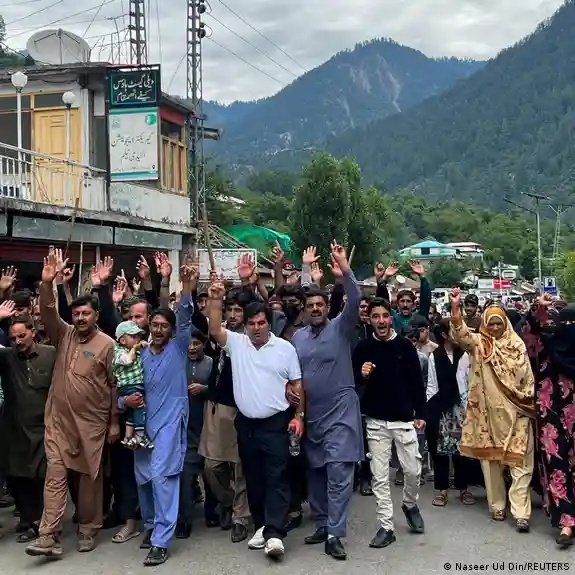
Elections for the 45 directly elected seats in the Pakistan-occupied Kashmir (PoK) legislative assembly have commenced amidst widespread protests and security concerns across the region. Voting will take place in three phases: the Mirpur division on July 27, the Muzaffarabad division alongside 12 refugee constituencies on August 2, and the Poonch division on August 10.
To prevent violence, Pakistan’s Punjab province has deployed 14,000 police personnel to the area. Security forces have been heavily equipped, with 70 percent carrying anti-riot gear and 30 percent armed.
The heightened security measures follow months of deadly clashes driven by the Jammu Kashmir Joint Awami Action Committee (JAAC). The group—which was banned by Islamabad—has called for a boycott of the polls and demanded the abolition of 12 assembly seats reserved for post-1947 refugees living in Pakistan, arguing the seats allow central political influence over local governance.
The political contest primarily features coalition partners Pakistan Muslim League-Nawaz (PML-N) and the Pakistan People’s Party (PPP) opposing each other, while former Prime Minister Imran Khan’s Pakistan Tehreek-e-Insaf (PTI) is boycotting the election.
India has consistently maintained that the entire region of Jammu, Kashmir, and Ladakh remains an integral part of the country under illegal Pakistani occupation. New Delhi reiterated that the unrest is a direct result of decades of systemic exploitation, administrative oppression, and heavy-handed law enforcement by Pakistani authorities.
