

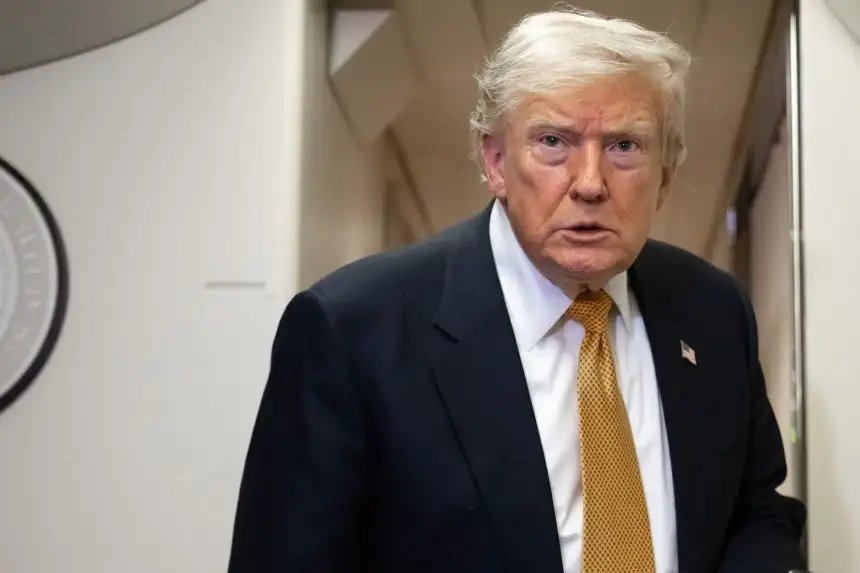
Israel recently shared new, specific intelligence with the Pentagon alleging that Tehran was plotting to assassinate U.S. President Donald Trump. According to U.S. media reports, this warning arrived in the weeks leading up to renewed U.S. strikes on Iran, which took place during the week-long funeral procession for former Supreme Leader Ali Khamenei.
While U.S. intelligence had reportedly been tracking a “steady hum” of generic Iranian threats for weeks, CNN reported that the new Israeli intelligence focused on a highly specific, imminent plot. However, the information has raised concerns among some American officials, who worry that Israel may have leveraged the unvetted data to sway Trump’s decision-making toward military escalation at a time when he was actively weighing whether to continue with a fragile ceasefire.
A History of Threats and Geopolitical Friction Tehran’s hostility toward Trump stems from the assassination of Qassem Soleimani—the top general of the Islamic Revolutionary Guard Corps (IRGC)—during Trump’s first presidential term. Tensions peaked again following the February 28, 2026, joint U.S.-Israeli strikes that killed Ali Khamenei and members of his family. During the subsequent funeral processions, Iranian mourners openly chanted for Trump’s death and displayed banners reading “We Will Kill Trump.”
Speaking at the NATO summit in Ankara, Trump publicly acknowledged the threat to his life, telling reporters, “They want to take out the U.S. leader—me. I saw this morning I’m on every single one of their lists.”
Thaw in Trump-Netanyahu Relations The sharing of this intelligence coincides with a visible thaw in relations between Donald Trump and Israeli Prime Minister Benjamin Netanyahu. Ties had previously grown icy due to conflicting strategic goals: Netanyahu has consistently advocated for sustained military operations to accomplish total war aims, whereas Trump has expressed reservations that an extended conflict could severely damage the global economy.
Though Washington and Tehran managed to secure a fragile ceasefire last month, a recent phone call between Trump and Netanyahu signaled a pivot back toward tight bilateral alignment. The Israeli Prime Minister’s office confirmed that the two leaders have agreed to maintain close “coordination between the countries,” with Trump updating Netanyahu directly on recent U.S. military activities in the Persian Gulf.
