

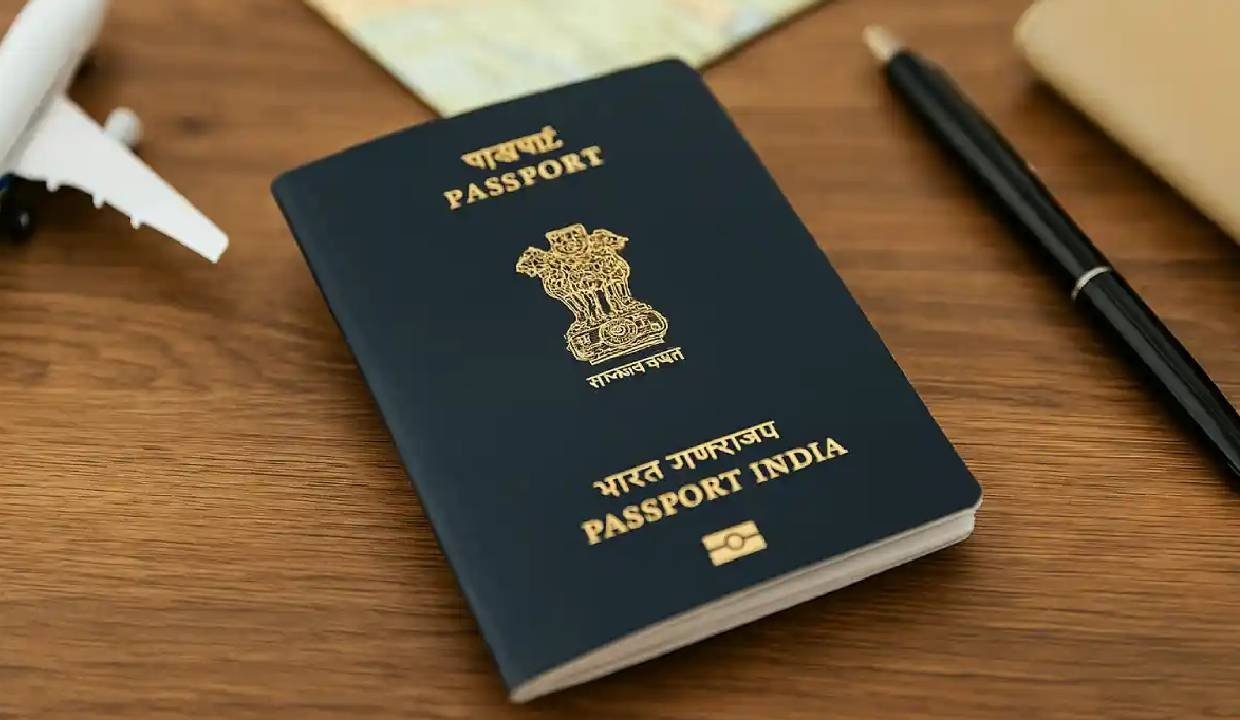
A major public debate has erupted online following statements from Ministry of External Affairs officials clarifying that an Indian passport is strictly a travel document and does not serve as conclusive, legal proof of Indian citizenship.
The clarification has sparked widespread confusion, with citizens and political leaders questioning how a document issued after stringent police verification can be excluded from proving national identity.
Why a Passport is Not “Conclusive” Proof
The legal framework separating travel rights from national identity rests on two distinct pieces of legislation:
-
The Passports Act, 1967: This law regulates the issuance of the physical travel document. Crucially, the Act contains provisions that technically allow the government to issue passports to certain classes of non-citizens under specific conditions. Because of this opening, courts (including a landmark 2013 Bombay High Court ruling) have consistently held that a passport cannot be treated as definitive evidence of citizenship.
-
The Citizenship Act, 1955: This remains the sole legal authority that governs, confers, and terminates an individual’s legal status as an Indian citizen.
Furthermore, a passport legally remains the property of the Government of India and can be impounded or revoked administratively, whereas citizenship is a constitutional right that cannot be stripped away as easily.
The Legal Standpoint on Common Indian IDs
The passport row has highlighted a larger, systemic issue: many of India’s most ubiquitous identity documents are legally barred from proving citizenship.
| Identity Document | Primary Purpose | Legally Proof of Citizenship? |
| Birth Certificate | Records date and place of birth under civil registration. | Yes (The primary foundational document for most citizens). |
| Passport | International travel and consular protection. | No (Regulated under the Passports Act, not the Citizenship Act). |
| Voter ID card | Establishes eligibility to vote in state and national elections. | No (Can be subject to re-verification on electoral rolls). |
| Aadhaar Card | Biometric identity verification for targeted welfare and services. | No (Explicitly stated as proof of residence, not citizenship). |
The Verification Loop: Legal experts and citizens note that administrative practice often contradicts strict legal definitions. To get a passport, one often needs resident IDs; to get resident IDs, one often needs historical family documents. This complex interdependence has intensified calls for a streamlined, universally accessible system of civil registration.
