

India has officially and categorically dismissed any possibility of involving outside nations to resolve its ongoing boundary alignment issues with Nepal.
The statement comes as a direct response to Nepalese Prime Minister Balendra Shah, who suggested in parliament that Kathmandu was in communication with both China and the United Kingdom to help mediate the centuries-old dispute.
The Core of the Contention
The geopolitical friction centers on three specific strategic regions located near the tri-junction where India, Nepal, and China meet:
-
Disputed Zones: Kalapani, Lipulekh, and Limpiyadhura.
-
India’s Position: New Delhi firmly maintains that these territories are historically and geographically an integral part of Uttarakhand.
-
The UK Connection: The Nepalese Prime Minister argued that because the border issues originate from the geopolitical cartography drawn before British India left the region, the United Kingdom (England) should be brought in to help resolve it.
India’s Official Response
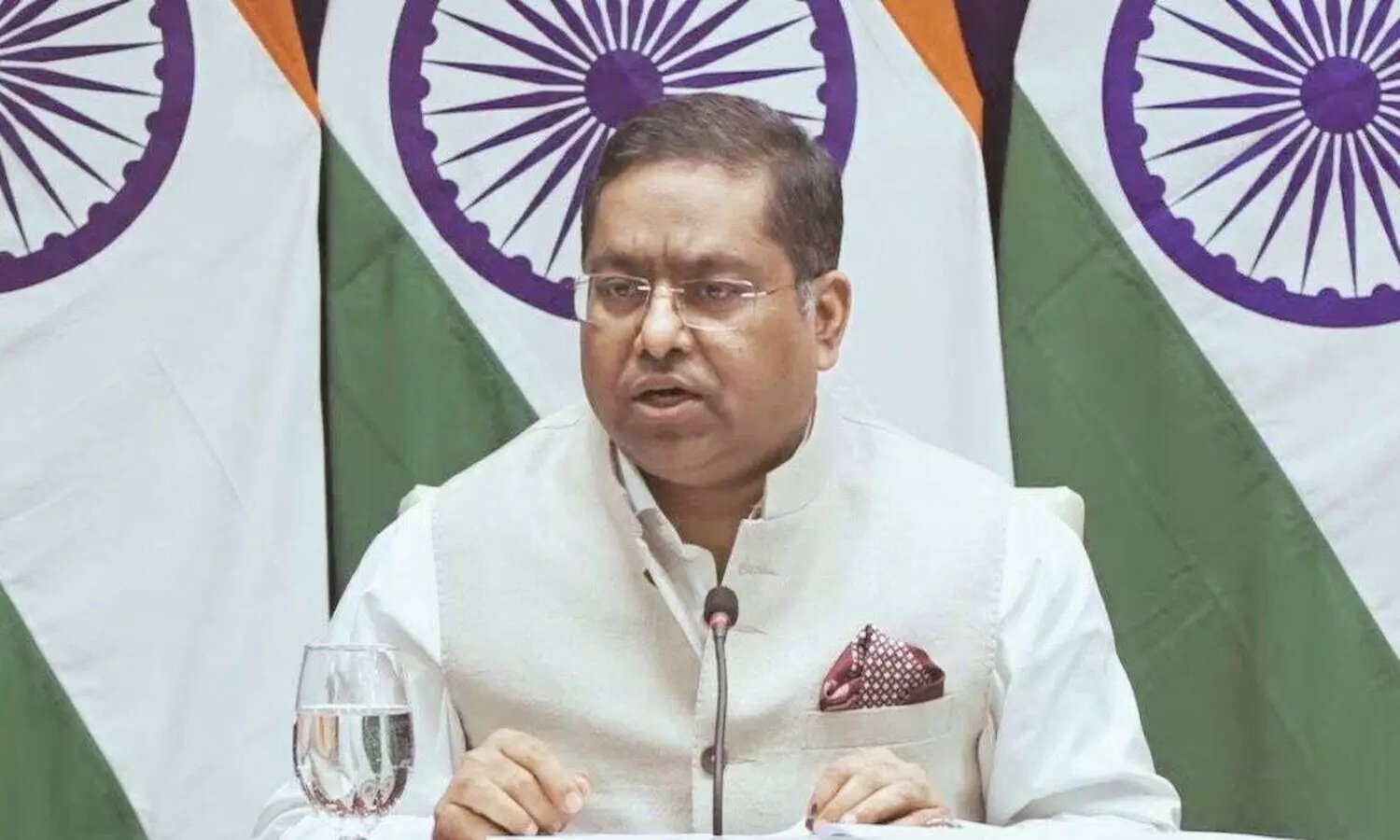
External Affairs Ministry (MEA) spokesperson Randhir Jaiswal outlined India’s diplomatic boundary position:
“There is no role for any third parties in a bilateral matter between India and Nepal.”
-
Bilateral Mechanisms Exist: Both nations already have robust, pre-established bilateral channels specifically designed to handle border mapping and diplomatic disputes.
-
98% Completed: Approximately 98% of the India-Nepal boundary has already been successfully demarcated.
-
Why Segments Remain Unresolved: The remaining minor, unresolved segments are primarily due to natural factors, such as the shifting course of the Gandak River, rather than clean-cut territorial conflicts.
-
Joint Mapping: Issues regarding local cross-border occupation and encroachment on designated “No-Man’s Land” are currently being actively mapped by joint technical teams from both countries.
Domestic Controversy Inside Nepal
Prime Minister Balendra Shah’s address to the Nepalese Parliament triggered an immediate domestic political backlash due to an unexpected admission:
-
The “Counter-Encroachment” Claim: Shah claimed that territorial encroachment wasn’t one-sided, stating that Nepal had also encroached on Indian territories over the years.
-
Damage Control: Hours later, the Nepalese Foreign Ministry rushed to clarify his statement, issuing a press release asserting that the Prime Minister was referring strictly to localized “no-man’s land” civil encroachments, not official territorial or state-backed expansion claims.
-
Parliamentary Backlash: Defiant opposition lawmakers in Nepal strongly objected to the Prime Minister’s speech, demanding that his remarks be formally expunged from the parliamentary record unless he could present immediate historical evidence showing where Nepal had seized Indian soil.
